As the exclusive vibration energy dissipation part within suspension systems, healthy shock absorber status directly determines driving safety, handling stability and ride comfort. Though factory OEM twin-tube dampers feature outstanding durability, long-term operation on complicated pavement, harsh climate and improper use gradually trigger aging and functional failure. Learning typical failure modes and mastering systematic diagnosis skills helps technicians avoid consequential damage to peripheral chassis parts and abnormal tire wear for secured driving safety.
Four Major Common Failure Modes
- Oil seal external leakage: The most intuitive malfunction. Piston rod oil seals undergo repeated reciprocating movement, mud abrasion and ambient temperature fluctuation for long service cycles. Rubber aging, seal lip wear or damaged dust boots cause gradual hydraulic oil seepage from dampers. Early-stage failure shows minor oil stain on piston rod; mid-stage develops into continuous dripping; severe oil shortage drastically cuts internal damping capacity, resulting in vague high-speed steering, aggravated body roll and excessive residual bounce over bumps. Note: mild oil sweating is normal (residual anti-rust coating from factory production), while continuous oil dripping or contaminated dust boots requires immediate replacement of dampers and seals.
- Internal valve wear & progressive damping fade: Even with zero external oil leakage, internal valve discs, piston rings and flow control valves wear out due to metal fatigue, contaminated hydraulic oil and thermal aging. Changed valve flow cross-section leads to nonlinear damping decline: good performance for short driving yet sharp damping drop after continuous high-load operation (severe thermal fade). Car owners usually complain “smooth ride when new, floating boat-like bouncing after long mileage”. This invisible failure cannot be checked visually; preliminary screening can be done via body compression test: push down one vehicle corner hard and release instantly; qualified dampers stabilize body within 1~2 bounces while faulty units bounce over three times continuously with insufficient damping.
- Bent piston rod & worn top mount bearing: Severe impacts (high-speed deep pothole crossing or hard chassis grounding) or long-term uneven load bend piston rods slightly. Bent rods create eccentric friction against oil seals during movement and trigger partial seal wear and abnormal oil leakage. Top mount bearings enable free relative rotation between dampers and chassis during steering; dried lubricant or worn ball bearings create “clicking” noise when turning, poor steering self-centering and irregular tire abrasion.
- Nitrogen leakage from reserve chamber & intensified internal cavitation: Low-pressure nitrogen inside twin-tube reserve chamber leaks slowly via defective sealing and loses volume compensation for piston stroke variation. Sudden pressure spike appears during compression stroke while air bubble cavitation easily forms in rebound process, creating stiff ride quality, amplified minor vibration and accelerated thermal damping fade; some vehicles generate gurgling water noise from gas mixed into hydraulic fluid.
Standard Scientific Diagnosis Process (Inspect-Inquire-Test)
- Visual Inspection: Check four dampers for external oil leakage, broken dust boots, fractured/collapsed springs and deformed top mounts.
- Auditory Check: Listen for metal friction noise, bump tapping sound or abnormal steering noise during road test.
- Customer Inquiry: Confirm failure occurring time, daily road conditions and previous modification/accident history.
- Road Test: Evaluate straight-line driving stability, brake nose dive level and body roll recovery during cornering; lift vehicle on hoist to manually shake wheels and check excessive suspension clearance plus conduct body bounce test. Professional inspection equipment including shock absorber damping tester and chassis clearance detector delivers pinpoint fault location.
Repair & Replacement Guidelines
Shock absorbers must be replaced in pairs (at minimum same axle pair); uneven left-right damping triggers brake pull and unstable handling. Replace aged dust boots, bump stops and top mount bearings synchronously during damper swap to prevent premature failure of new dampers caused by defective old peripheral parts. Install OEM-spec or equivalent aftermarket components only; low-grade inferior replacement parts feature mismatched damping curves against factory calibration and disrupt ESC/TCS electronic stability system programming. Complete four-wheel alignment post-installation to restore original suspension geometry parameters.
Preventive Maintenance Advice
Avoid high-speed crossing of speed bumps and deep potholes; regularly clean chassis mud and grime; inspect overall damper condition every 40,000km or two years; retain sufficient suspension travel after lowering vehicle height via modification to eliminate bottom-out damage. Understanding twin-tube damper failure rules enables scientific diagnosis, standardized repair and extended chassis service life for safe daily driving.
Company Introduction of MAX Auto Parts
MAX Auto Parts is the manufacturer and exporter of auto parts.
Main product range: shock absorber, auto coilover, piston rod, stamping part, powder metallurgy component, suspension spring, seamless tube, oil seal, shim disc, rubber bushing and other automotive spare parts. Our partnered production factories have obtained TS16949 quality certification.
We equip full set of production machinery including CNC lathes, precision turning machines, surface grinders and more; several core processing equipment are imported from overseas to secure high machining precision.
MAX is also equipped with complete laboratory testing equipment for strict quality control, such as optical profile projector, surface roughness tester, micro-hardness tester, universal tensile testing machine, metallographic analyzer, thickness gauge and salt spray corrosion tester.

MAX owns an experienced automotive component engineering team. Our engineers not only source qualified spare parts for global clients, but also deliver professional technical support, full-cycle production supervision and continuous quality tracking service. Both OEM and ODM custom development are acceptable. MAX is capable of issuing full-range inspection documents and test reports covering PPAP, RT, UT, MPI, WPS & PQR and other standard certification files.
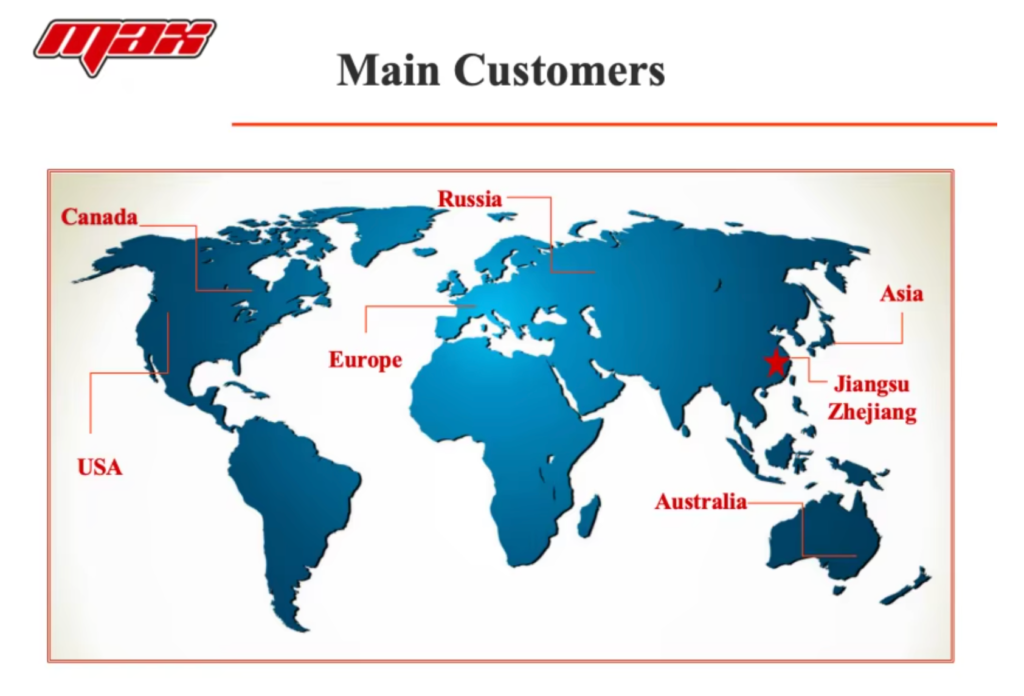
Our products have been exported to Russia, European countries, Japan, South Korea, Africa, Canada, USA, Australia and many other global markets. MAX builds solid long-term cooperative partnerships with worldwide clients based on consistent reliable product quality and good market reputation.
MAX targets win-win cooperation with all partners. We firmly believe your business growth equals our success!