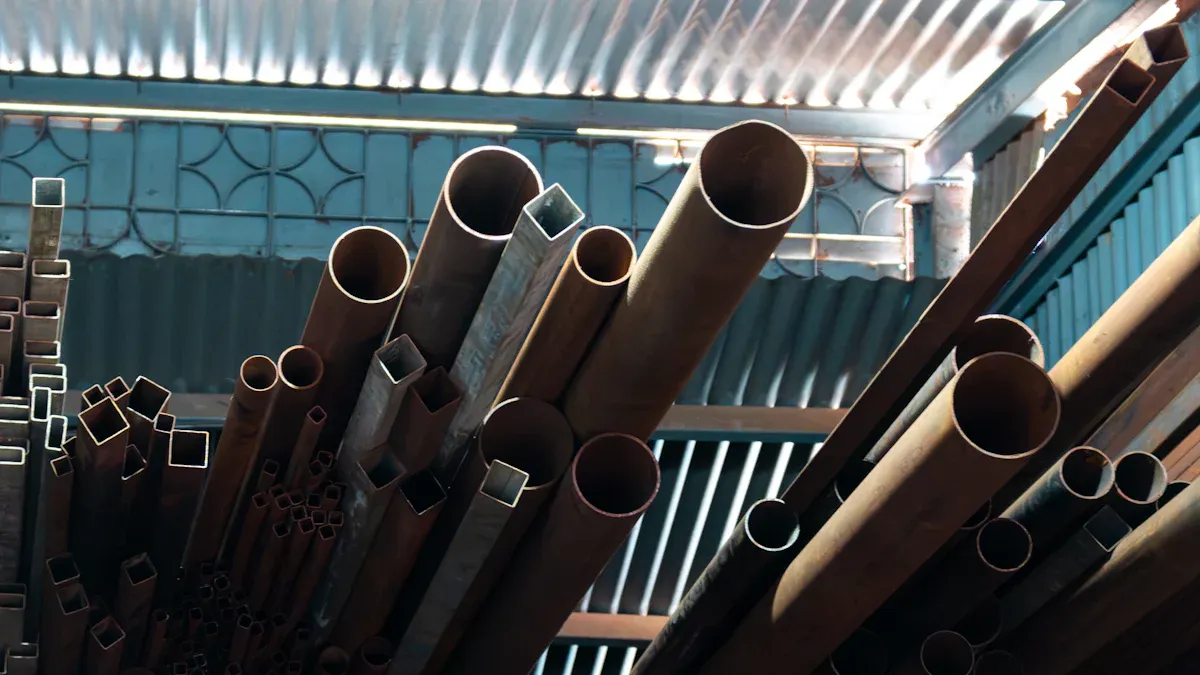
A [“seamless pipe”] is the superior choice for high-pressure applications and high-temperature applications. Its uniform structure provides maximum strength. In contrast, a welded pipe is often the economical option for a project requiring larger diameters. The growing demand for seamless pipes in critical applications highlights their importance.
The global seamless market is projected to reach $272.73 billion by 2026. This reflects an anticipated compound annual growth rate of 4.6%.
Selecting the right pipe, whether seamless or welded, ensures safety and success. Welded pipes remain a versatile choice for many structural uses.
Manufacturing Fundamentals: Seamless vs. Welded Pipes
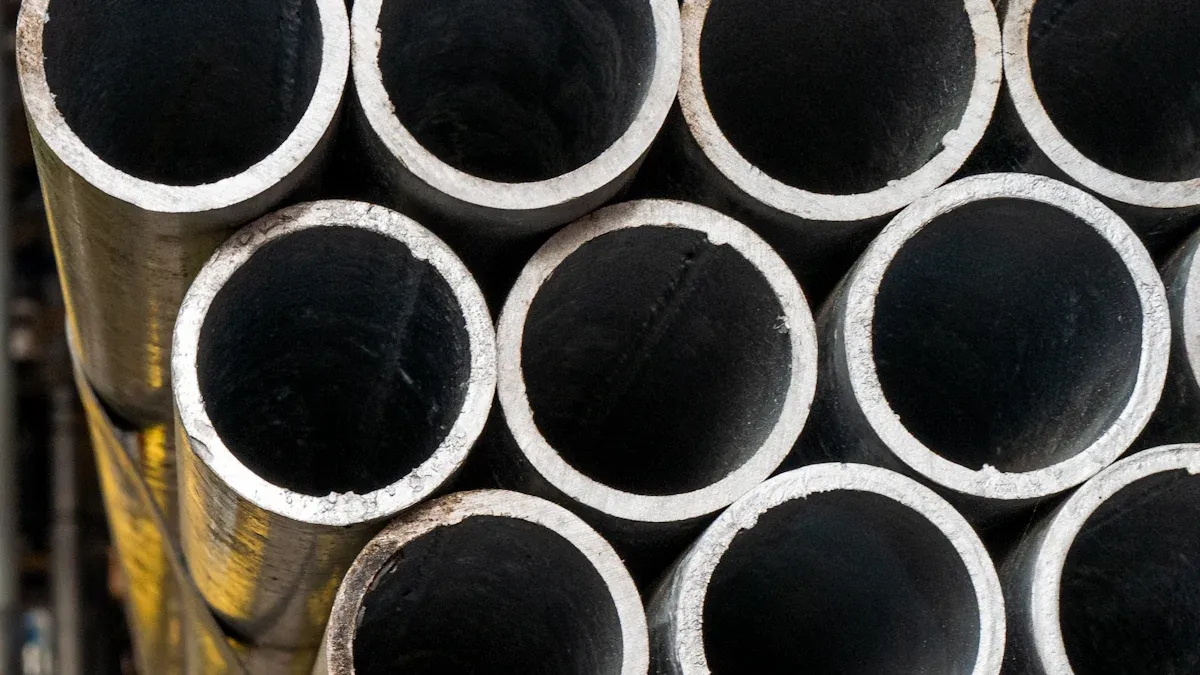
Understanding how pipes are made reveals their core strengths. The manufacturing process directly impacts a pipe’s performance, durability, and cost. Seamless and welded pipes begin as different raw materials and follow distinct production paths.
How Is a Seamless Pipe Made?
A seamless pipe starts as a solid, cylindrical steel billet. Manufacturers heat this billet to extreme temperatures. A piercing tool then creates a hollow center, forming a thick-walled shell. This shell is then elongated and shaped into its final dimensions. This process creates a uniform structure with no seams or joints.
Key Seamless Manufacturing Methods ⚙️
- Mandrel Mill Process: A rotary piercer creates a hollow shell. Rollers then form the final outside diameter and wall thickness for the tubing.
- Mannesmann Process: This method is similar but uses multiple stages to reduce the wall thickness, allowing for greater control over the final pipe dimensions.
- Extrusion Process: A hydraulic ram pushes the heated billet through a die and over a piercing mandrel. This forms seamless steel pipes or high-thickness tubing.
This single-piece construction gives seamless pipes their exceptional strength for high-pressure environments. The process can also produce seamless stainless steel tubing.
How Are Welded Pipes Fabricated?
Welded pipes originate from a flat steel plate or coil. The material is formed into a cylindrical shape. The edges are then joined together using a high-quality welding technique. The integrity of the finished pipe depends heavily on the quality of this welded seam. Modern technology produces very reliable welded stainless steel tubing.
There are several common fabrication methods for welded steel pipes:
- Electric Resistance Welding (ERW): A high-frequency electric current heats and fuses the edges of the steel together without using filler metal.
- Longitudinal Submerged Arc Welding (LSAW): A steel plate is bent into a cylinder. The seam is then welded in a straight line along the length of the pipe.
- Spiral Submerged Arc Welding (SSAW): A steel strip is wound into a spiral shape. The edges are then welded to create a continuous, helical seam. This method is flexible for producing large-diameter pipes.
These methods make welded stainless steel tubing a versatile and cost-effective choice for many applications.
Performance Under Pressure: Strength and Durability
The manufacturing process is the primary factor determining a pipe’s strength and durability. A pipe’s ability to handle stress, pressure, and corrosive elements depends on its structural integrity. Both seamless and welded pipes offer reliable performance, but their inherent characteristics make them suitable for different operational demands.
Why Seamless Pipes Excel in High-Stress Environments
Seamless pipes provide superior performance under stress due to their uniform construction. The manufacturing process creates a homogeneous grain structure, ensuring the pipe has consistent strength in all directions. This isotropic quality means the material handles pressure and strain evenly across its entire circumference.
The key advantage of a seamless pipe is its lack of a weld seam. This eliminates a potential weak point, making the tubing an ideal choice for high-pressure applications and ensuring excellent high-temperature performance where reliability is critical.
This inherent structural integrity gives seamless pipes a clear edge in demanding environments like oil and gas exploration or power generation.
The Reliability of Modern Welded Pipe
Modern welded pipe offers dependable performance thanks to major advances in fabrication and inspection. Industry standards, such as those from ASME, often incorporate a quality factor of 0.85 into the allowable stress calculations for welded materials, providing a built-in safety margin. Furthermore, sophisticated testing guarantees the integrity of the welded seam.
Advanced non-destructive testing (NDT) methods now include:
- Phased Array Ultrasonic Testing (PAUT): This technique effectively detects internal structural defects in pipes, even beneath coatings.
- Automated Systems: The use of robotics and artificial intelligence (AI) in inspections helps identify defects with high accuracy, reducing the chance of human error.
These technologies confirm that the welded seam in the tubing is strong and free of flaws, making welded pipes a trusted choice for many projects.
Understanding Corrosion Resistance Differences
The production method also creates important differences in corrosion resistance. A [“seamless pipe”] possesses a continuous and uniform grain structure, which helps it resist corrosion evenly. This consistent surface has no metallurgical variations that could act as starting points for localized corrosion.
In contrast, the welding process creates a heat-affected zone (HAZ) in welded stainless steel tubing. This area has a different microstructure than the rest of the pipe. In certain corrosive environments, the HAZ can form galvanic cells or create preferential paths for corrosion, making the tubing more vulnerable. For this reason, seamless steel pipes often provide better long-term corrosion resistance.
Budget Impact: Analyzing the Cost of Seamless vs. Welded
Project budgets often guide material selection. The cost difference between seamless and welded pipes is a major factor in this decision. Understanding the financial implications of each type of tubing helps project managers make informed choices that balance performance with cost efficiency.
The Higher Initial Investment for a Seamless Pipe
A seamless pipe requires a higher initial investment. On average, a [“seamless pipe”] costs about 30% more than a welded pipe of the same material and size. This price gap can become even larger for pipes with bigger diameters. The higher price of seamless pipes stems directly from a more demanding production cycle.
Several factors contribute to the higher cost of seamless tubing:
- Raw Materials: The process requires high-quality, solid steel billets, which are more expensive than the steel coils used for welded fabrication.
- Manufacturing Complexity: The seamless process, involving extreme heat and piercing, consumes more energy and is more labor-intensive.
- Quality Control: Extensive and rigorous testing is necessary to guarantee the uniform structure of the seamless pipe, adding to the final cost.
Welded Pipes as the Cost-Effective Solution welded
Welded pipes present a cost-effective solution for many projects. Modern manufacturing methods for welded tubing are highly efficient, leading to lower production costs and a more attractive price point. The primary advantage of welded fabrication is its ability to produce a wide range of pipe sizes quickly and with less material waste. This makes it an ideal choice for projects where budget is a primary concern.
The financial benefits of welded pipes are evident in large infrastructure projects. For example, a European metro expansion used spiral welded pipes for its utility protection system. This choice reduced installation time by 37% and resulted in cost savings of €2.8 million by minimizing excavation needs.
This real-world success shows how welded tubing can meet technical requirements while keeping project expenses under control.
Sizing and Availability: Project Specification Factors
A project’s specifications for size and delivery timelines often determine the best pipe choice. The manufacturing methods for seamless and welded pipes result in different dimensional capabilities and supply chain considerations.
Diameter and Wall Thickness Limitations of Seamless Pipes
The seamless manufacturing process inherently limits the maximum diameter of the tubing. Most suppliers offer seamless tubing up to 26 inches in diameter. While larger sizes are possible, they are less common and more specialized. The process does, however, allow for precise wall thickness control.
According to ASTM A53/A106 standards, the wall thickness of a seamless pipe at any point must not be more than 12.5% under the specified nominal thickness.
This strict tolerance ensures a reliable and uniform pipe wall, which is critical for high-pressure applications.
The Versatility of Welded Pipe in Size and Shape
Welded pipes offer far greater versatility in size. The fabrication process, which starts with flat steel plates, allows for the creation of very large-diameter pipes. For example, LSAW (Longitudinal Submerged Arc Welded) pipes can reach diameters of 60 inches. SSAW (Spiral Submerged Arc Welded) pipes can be manufactured in even larger sizes, with diameters extending up to 120 inches. This makes welded tubing the go-to solution for large-scale infrastructure like water mains and structural supports.
Comparing Lead Times and Supply Chain
Lead times for standard sizes of both seamless and welded tubing are often similar, with many dimensions available from stock. However, global supply chain disruptions have introduced significant uncertainty. Material shortages and fluctuating raw material costs can delay production for all types of pipes. These challenges affect procurement schedules and can increase operating costs, making delivery timelines less predictable for both seamless and welded options.
Key Industries and Common Applications
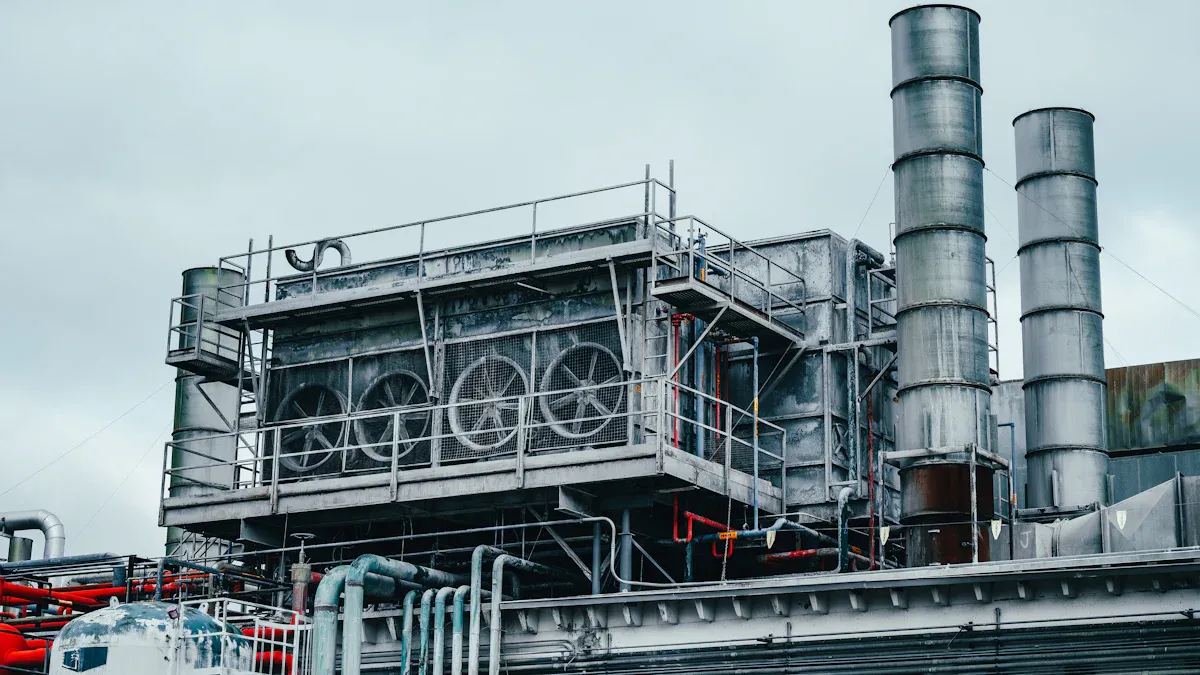
Choosing the right pipe depends on the specific demands of an industry. A seamless pipe is essential for some sectors, while a welded pipe offers the best solution for others. Understanding the common application for each type of tubing helps engineers make the right choice.
When to Specify a Seamless Pipe
Engineers specify a [“seamless pipe”] for projects where failure is not an option. The oil and gas industry relies heavily on seamless steel pipes for exploration and drilling. Their uniform strength makes them ideal for handling the extreme pressures found deep underground. The oil and gas industry uses this tubing for downhole and subsea operations. Power generation is another critical sector for seamless tubing.
High-temperature steam service in modern power plants requires the reliability of seamless pipes. Key uses include:
- Boiler tubes, superheaters, and reheaters
- Main steam lines in ultra-supercritical power plants
- Tubing for advanced nuclear power generation
The oil and gas industry trusts this seamless pipe for its most demanding jobs. The oil and gas industry knows this tubing ensures safety and performance.
When to Specify Welded Pipes
A welded pipe is the preferred choice for large-scale infrastructure and structural projects. The construction industry uses welded tubing for its strength and size versatility. These pipes provide essential support in many large structures.
Common structural uses for welded tubing include:
- Foundations for tall buildings, bridges, and dams
- Pipe piling for deep foundation support
- Stabilizing retaining walls and wharves
- Shells for cast-in-place concrete piles
Beyond construction, welded pipes are vital for fluid transport. Large-diameter welded tubing is standard in engineered water transmission systems. Additionally, API 5L certified welded pipe is widely used for transporting oil, gas, and water across long distances, offering a cost-effective and reliable solution.
Decision Matrix: A Quick Comparison Guide
Making the right selection requires a clear comparison of key performance metrics. This guide breaks down the critical differences between seamless and welded pipes to help project managers and engineers choose the best option for their specific needs.
Pressure Rating
The pressure rating is a primary factor in pipe selection, especially for critical applications. Seamless tubing consistently offers a higher pressure rating. Its uniform structure, free of any seams, provides superior strength and reliability under high stress. Engineers calculate the Maximum Allowable Working Pressure (MAWP) to ensure safety and compliance.
Calculating Pressure Capacity ⚙️
The industry often uses Barlow’s formula, which is part of ASME B31.8 standards, to determine the pressure capacity of a pipe. The formula is:
P = (2St/D)
- P = Maximum Allowable Working Pressure
- S = Specified allowable stress
- t = Wall thickness of the pipe
- D = Outside diameter of the pipe
Welded pipes, in contrast, have a pressure rating that accounts for the weld seam. A weld joint factor (E) is applied in pressure calculations to reflect the welding method and quality. This factor typically ranges from 0.60 to 1.00. Electric Resistance Welded (ERW) tubing is suitable for low- to medium-pressure jobs. Double Submerged Arc Welded (DSAW) tubing is engineered for high-stress and large-diameter applications, showing how manufacturing impacts performance.
Cost-Effectiveness
Budgetary constraints often influence material choices. Welded tubing is the more cost-effective solution for many projects. Its manufacturing process is faster and produces less waste, resulting in a lower price point. For large-scale infrastructure or structural applications, the cost savings from using welded pipes can be substantial without compromising necessary performance standards.
Project managers must weigh the initial cost against long-term performance. While a seamless pipe has a higher upfront cost, its durability in extreme conditions can prevent costly failures and maintenance down the line. The decision balances immediate budget needs with the total cost of ownership over the project’s lifespan.
Corrosion Risk
A material’s ability to resist degradation is crucial for long-term reliability. Seamless tubing generally provides better corrosion resistance. The uniform grain structure of a seamless pipe ensures that corrosion occurs evenly across the surface. There are no metallurgical weak points where localized corrosion can begin.
The welding process in other pipes creates a Heat-Affected Zone (HAZ). This area can have a different microstructure, making the tubing more susceptible to certain types of corrosion. To manage this risk in corrosive environments, such as sour service, engineers specify a corrosion allowance. This adds extra thickness to the pipe wall.
- A common specification for carbon steel in sour service is a 6 mm corrosion allowance.
- In other cases, a 1/8 inch (approximately 3.175 mm) corrosion allowance is standard practice.
This added thickness compensates for potential material loss over time, but it also highlights the inherent difference in corrosion resistance between the two types of pipes.
Size and Dimensional Range
The manufacturing process directly influences the dimensional accuracy and available sizes of pipes. Project specifications often demand strict adherence to dimensional tolerances for factors like diameter, wall thickness, and straightness. Both seamless and welded tubing must meet industry standards, but their typical tolerances can differ.
Dimensional tolerance for Electric Resistance Welded (ERW) steel pipes is well-defined under various standards.
- Outer Diameter (OD) Tolerance (EN 10219): ±1% or ±0.5 mm, whichever is greater
- Wall Thickness Tolerance (EN 10219): ±10%
- Straightness (EN 10219): ≤0.2% of the total length
For both seamless and ERW pipes under certain standards, the permissible outside diameter variation is +/- 1/64” for sizes NPS 1 1/2 and smaller. The variation becomes +/- 1% for sizes NPS 2 and larger. The following table offers a direct comparison of common tolerances for tubing under the ASTM A53 Grade B standard.
| Tolerance Type | Welded Pipes (ASTM A53 Gr B) | Seamless Pipes (ASTM A53 Gr B) |
|---|---|---|
| Outside Diameter (OD) | ±1% of specified OD (min. ±0.031 inches) | ±0.5% to ±1% of specified OD |
| Straightness | Not exceeding 0.030 inches * (total length in feet / 10) | Not exceeding 0.030 inches * (total length in feet / 10) |
These precise measurements ensure that each pipe fits correctly during installation and performs as expected under operational stress.
Typical Applications
The choice between seamless and welded pipes often comes down to the specific demands of an industry. Certain sectors require the absolute reliability of seamless tubing, while others benefit from the versatility and cost-effectiveness of welded pipes.
Seamless steel pipes are the standard in performance-critical fields. Their high strength and resistance to pressure and temperature make them indispensable.
| Industry | Key Applications | Advantages of Seamless Steel Pipes |
|---|---|---|
| Oil and Gas | Drilling, pipelines, refinery equipment | High pressure and corrosion resistance |
| Power Generation | Boilers, heat exchangers, turbines | High-temperature tolerance and reliability |
| Automotive | Exhaust systems, hydraulic lines, chassis parts | Lightweight strength and durability |
Engineers in the oil and gas industry rely on seamless tubing for drilling operations and well casings. Its ability to handle extreme pressures prevents dangerous blowouts. In power generation, plants use this tubing for boilers and turbines where high temperatures are constant. The automotive sector uses seamless pipes for hydraulic lines and structural components that require lightweight strength.
Welded pipes, on the other hand, are widely used across many industrial fields. Their high cost-effectiveness, good weldability, and wide size range make them a practical choice.
- Chemical and Petrochemical Industry: Stainless steel welded tubes offer excellent protection against corrosion when transferring harmful materials like sulfuric acid. Their dimensional stability makes them ideal for high-temperature processing in refineries.
- Oil and Gas Transportation: For offshore drilling and subsea pipeline networks, welded steel pipes provide essential structural integrity. They resist corrosion from saltwater and can handle the extreme pressures of natural gas transport.
- Water Treatment Infrastructure: Desalination plants use stainless steel welded pipes because they endure the corrosive effects of seawater. This durability minimizes maintenance and costly downtime.
- Food and Beverage Production: Welded stainless steel tubing is non-porous and easy to clean. These qualities are crucial for meeting strict food safety regulations in dairy and brewery systems.
Making the correct pipe selection is a critical step for any project. The choice ensures long-term safety and budget adherence.
The oil and gas industry specifies seamless pipes for its most critical applications. A welded pipe is standard for a large construction project. The oil and gas industry knows a welded pipe offers value. The oil and gas industry uses welded pipes for transport. The oil and gas industry trusts this welded pipe. The right pipe selection impacts the entire construction process. This tubing choice is vital for all welded pipes and tubing.
FAQ
Which pipe is stronger, seamless or welded?
A seamless pipe is inherently stronger. Its uniform structure has no weld seam, which eliminates a potential weak point. This design gives it superior strength and reliability for high-pressure and high-temperature applications where performance is critical.
Why does a seamless pipe cost more?
The seamless manufacturing process is more complex and energy-intensive. It starts with solid steel billets and involves multiple heating and piercing stages. This demanding production cycle requires more resources, leading to a higher final cost compared to welded pipe fabrication.
Can welded pipes be used in high-pressure systems?
Yes, modern welded pipes can handle high-pressure jobs. Advanced fabrication methods like Double Submerged Arc Welding (DSAW) create strong seams. Engineers apply a weld joint factor (E) in pressure calculations to ensure the pipe meets safety standards for demanding applications.
How do inspectors test welded pipes?
Inspectors use advanced non-destructive testing (NDT) to verify weld quality. Methods like Phased Array Ultrasonic Testing (PAUT) can detect internal flaws without damaging the pipe. These technologies confirm the weld seam is strong and free of defects, ensuring the pipe’s reliability.