A shock absorber part controls how a car handles bumps and keeps the tires on the road. The suspension system supports the car’s weight and helps absorb road shocks. Many drivers do not know the difference between these two, which can lead to safety problems. If someone neglects the shock absorber, the car may lose control on rough roads. Poor suspension can also cause uneven tire wear and affect steering and braking. Car owners should learn to identify parts like the shocker rod to keep their car safe. MAX Auto Parts offers the best motorcycle shocks and reliable coilovers for every car.
Key Takeaways
A shock absorber controls how a car handles bumps and keeps tires on the road. It helps improve ride quality and stability.
Drivers should watch for signs of worn shock absorbers, like excessive bouncing or uneven tire wear. Regular checks can prevent safety issues.
The suspension system supports the car’s weight and absorbs shocks. It works with shock absorbers to keep the car steady and safe.
Inspect suspension parts regularly for leaks, rust, or damage. This helps maintain car performance and safety.
Using quality parts from trusted brands like MAX Auto Parts can enhance your car’s handling and comfort on the road.
What Is a Shock Absorber?
Shock Absorber Function
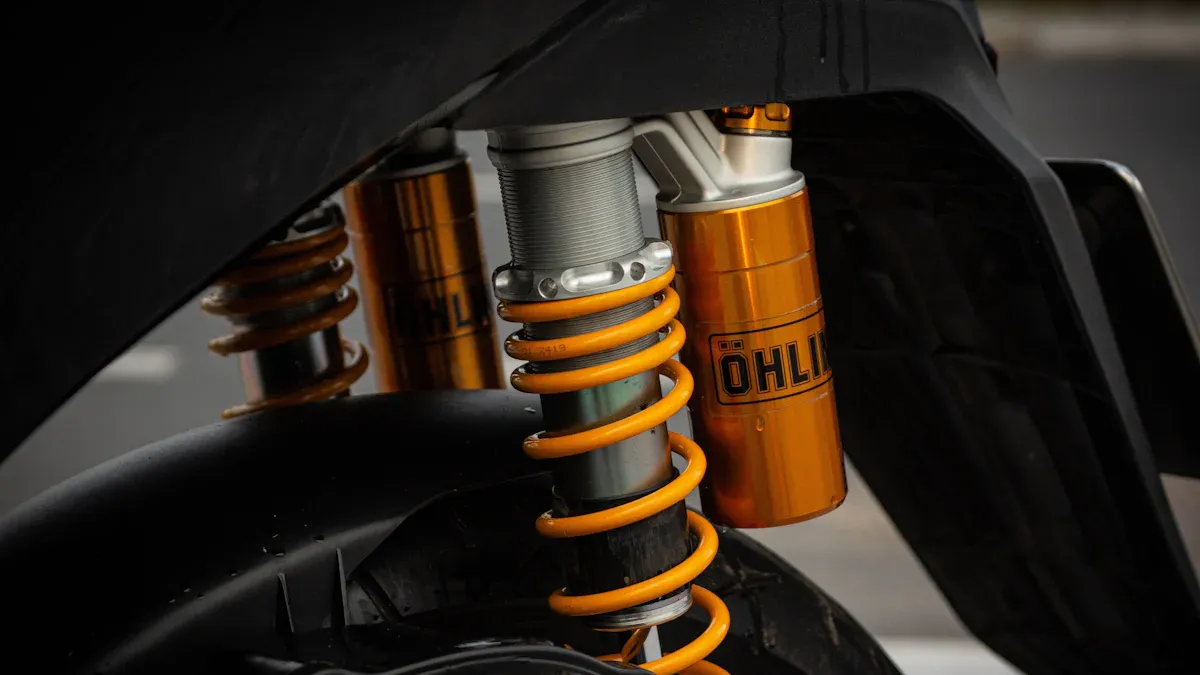
A shock absorber is a mechanical or hydraulic device that absorbs and dampens shock impulses. In automotive engineering, experts call it a damper. This part converts the kinetic energy from a shock into heat, which then dissipates. The shock absorber role in a car is to reduce the effects of traveling over rough ground. It improves ride quality and helps the car handle better. The shock absorber works with the suspension system to dampen spring oscillations. It uses oil and gases to absorb extra energy from the springs.
The shock absorber controls the movement of the suspension. It provides resistance to dampen the up-and-down motion of the car. The shock cushions the car when it moves over bumps or potholes. This action keeps the car stable and comfortable. The shock absorber also helps keep the tires in contact with the road. The shocker rod is a key part inside the shock absorber. It moves up and down as the car travels, helping the shock do its job. The shocker rod works with other parts to manage the car’s movement and absorb impacts.
Tip: A well-functioning shock absorber and shocker rod help prevent excessive bouncing and keep the car safe on the road.
Signs of Shock Absorber Wear
Drivers should watch for signs of worn shock absorbers to keep their car safe. The most common signs include:
The car bounces too much after hitting a bump.
The car leans or tips during sharp turns, acceleration, or braking.
Fluid leaks appear behind the tires, showing possible shock problems.
The car makes clunking noises when driving over rough surfaces.
Uneven tire wear, such as tire cupping, can signal worn shocks.
Steering feels loose or slow to respond.
The car nose-dives when braking.
The car squats or rolls during stops or turns.
The ride feels rough or uncomfortable.
The shocker rod may show signs of damage or wear.
A damaged shocker rod can cause many of these problems. Regular checks of the shock absorber and shocker rod help prevent safety issues. Drivers should replace worn shocks and shocker rods to maintain car performance.
Suspension System Overview
Main Suspension Components
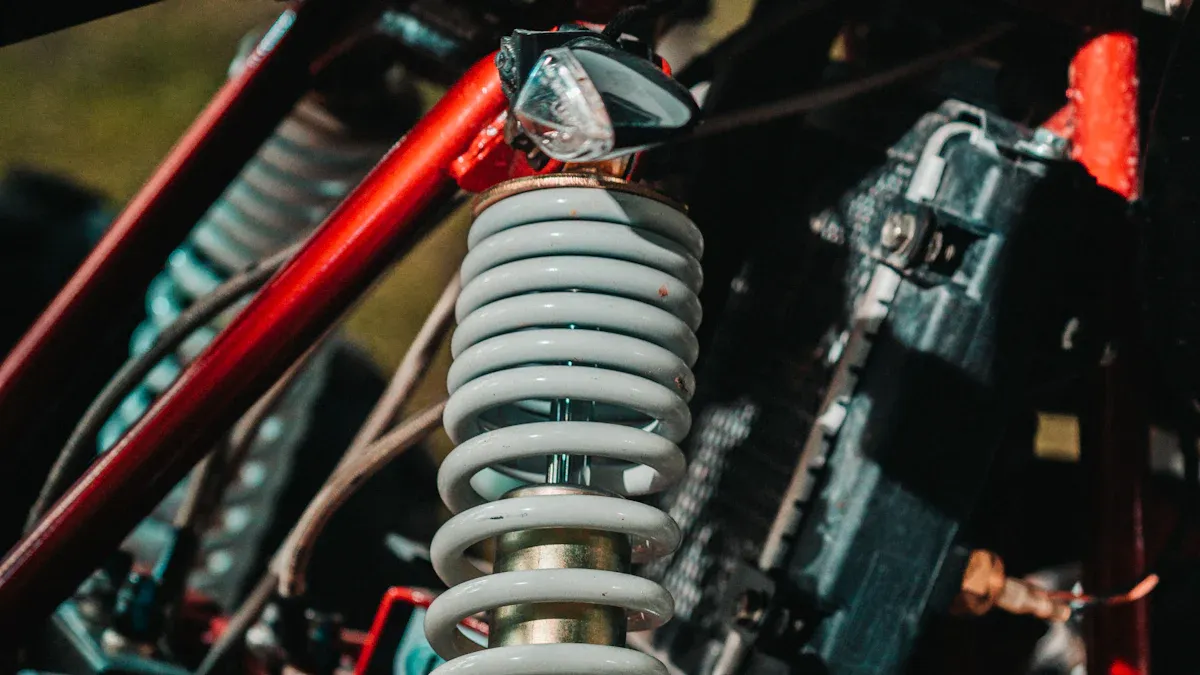
The suspension system helps cars stay safe and comfy. It uses many parts that work together. These parts support the car and help absorb bumps. Here are the main parts found in most cars:
Springs: These soak up bumps and shakes. They help the car ride smoothly.
Shock absorbers: These control how the wheels move. They stop the car from bouncing too much.
Struts: These hold up the car’s weight. They help make the ride steady.
Control arms: These link the wheels to the car’s frame. They guide how the wheels move.
Ball joints: These join control arms to steering knuckles. They let the car steer smoothly.
Tie rods: These connect the steering rack to the steering knuckles. They help the car turn.
Sway bars: These help control car roll. They make the car handle better.
Each part has a special job to keep the car balanced and safe. The shock absorber works with springs and struts. Together, they help the car handle bumps and rough roads. The suspension system uses these parts to keep the car steady. It also helps the tires stay on the road.
Note: MAX Auto Parts makes strong suspension parts like shocks, springs, and struts. Many people like their products because they last long and work well. Their TS16949 certification means they care about quality.
Suspension System Role in Handling
The suspension system does more than absorb bumps. It helps the car steer and speed up. This system keeps the car balanced and steady. It works even on bumpy roads. The suspension helps the tires grip the road. This is important for safe driving. It also stops the car from bouncing too much. This makes the ride comfy for everyone.
A good suspension controls car roll during turns. It helps the car handle better. It spreads out the force from bumps. This keeps people inside the car safe. The shock absorber works with other parts to keep the car steady. Drivers feel more in control and comfortable when the suspension works well.
MAX Auto Parts is known for great suspension parts. Customers from many places say good things about their products and service. Their skills help cars stay safe and work their best.
Shocker Rod and Other Key Parts
Identifying a Shocker Rod
A strut rod is a vital part inside the shock absorber. This rod moves up and down as the car travels over bumps. The strut rod connects to the piston inside the shock absorber. When the car hits a bump, the strut rod slides through the shock body. This movement helps control how fast the suspension moves. Mechanics often spot the strut rod by looking for a shiny metal rod sticking out from the top or bottom of the shock absorber. The strut rod usually has a smooth surface and fits tightly inside the shock. If the strut rod looks bent, rusty, or scratched, it may not work well. Drivers should check the strut rod for leaks or damage during regular car inspections. MAX Auto Parts makes strut rods that meet strict quality standards. Their strut rods help keep the car stable and safe.
Shocker Rod vs. Other Suspension Parts
The strut rod works differently from other suspension parts. The main job of the strut rod is to move inside the shock absorber and control the car’s up-and-down motion. The suspension spring, on the other hand, supports the car’s weight and absorbs bumps. The table below shows the main differences between a suspension spring and a shock absorber, which includes the strut rod:
Feature | Suspension Spring | Shock Absorber (with Strut Rod) |
|---|---|---|
Primary Function | Supports the weight of the car and absorbs bumps | Controls and dampens the motion of the spring |
Design Complexity | Simple design | More complex, uses hydraulic systems |
Weight Support | Holds car weight, keeps ride height | Does not hold weight, only dampens motion |
Energy Conversion | Stores and releases energy | Converts kinetic energy into heat |
Types | Coil, leaf, air springs | Twin-tube, monotube, remote reservoir |
Performance Variation | Consistent performance | Performance changes with different valving |
The strut rod does not support the car’s weight. It only helps the shock absorber control movement. Struts vs. shock absorbers is a common topic. Struts combine the shock absorber and spring in one unit, while a shock absorber with a strut rod works with separate springs. The strut rod is different from a strut rod in a strut assembly, but both play a role in keeping the car steady.
Tips for identifying and maintaining these parts:
Look for the strut rod inside the shock absorber.
Check for leaks, bends, or rust on the strut rod.
Inspect the suspension spring for cracks or sagging.
Replace worn strut rods and springs with quality parts from MAX Auto Parts.
A well-maintained strut rod helps the car handle better and keeps everyone safe. MAX Auto Parts offers strong, reliable strut rods and other suspension parts for every car.
Suspension vs. Shock Absorber: Key Differences
Roles in Vehicle Handling
The suspension and shock absorber work together in a car. Each part does something special to help the car move safely. The suspension system holds up the car’s weight. It keeps the tires touching the road. The shock absorber controls how the suspension moves. It stops the car from bouncing and shaking too much.
Here is a table that shows how the suspension and shock absorber are different:
Feature | Shock Absorber | Suspension System |
|---|---|---|
Basic Function | Changes movement energy into heat | Holds up the car and keeps it at the right height |
Damping | Stops bouncing after hitting bumps | Makes the ride smoother and more stable |
Compression Control | Controls how fast the car goes up and down | Lets the car move up and down and helps handling |
Body Control | Stops the car from rolling or diving when braking | Keeps tires on the road for safety |
The suspension system takes in bumps from the road. This makes the ride smoother. It helps the car turn and keeps it steady. Good suspension helps tires grip the road better. It also stops the car from rolling too much. The shock absorber helps control the suspension’s movement. It keeps the car from bouncing too much and helps the driver stay in control.
When both parts work well, the car handles better. The car feels steady when turning or stopping. The suspension keeps the car balanced. The shock absorber cuts down on shaking and keeps tires on the road. Working together, they make driving safer and more comfortable.
Tip: Some people think the shock absorber holds up the car. It does not. It only controls how the suspension moves. The suspension system supports the car and takes in bumps.
A car with good suspension and shock absorbers steers quickly and stops safely. Bad parts can make the car skid or tip over. Tests show that poor suspension can cause more accidents. A broken suspension can fail after 107,499 km, raising accident chances by 10%.
Shock absorbers help keep tires lined up right. They stop bouncing and make the ride smoother on rough roads. Different shocks work best for different driving styles. This changes how the car handles and stays steady.
Maintenance Tips
Checking the suspension and shock absorber often keeps them working well. Drivers should look at the suspension every year or every 12,000 miles. If the car drives on rough roads or carries heavy things, check more often. After hitting a pothole or curb, look for damage.
Try these steps to find problems with the suspension and shock absorber:
Look at the parts for leaks, rust, or damage.
Drive on different roads and listen for weird sounds or handling issues.
Push down on each corner of the car. If it bounces a lot, the shock absorber may be bad.
Make sure the wheels are lined up right.
Check for fluid leaks near the shock absorber or struts.
Watch for these signs of trouble with the suspension or shock absorber:
Tires wear unevenly
The ride feels rough
The car pulls to one side
The front dips when braking
The car leans or rolls too much
Strange sounds
Oil leaks
To keep shock absorbers working well, drivers should:
Check shocks every 5,000 miles or when changing oil.
Keep shocks clean to stop seals and moving parts from wearing out.
Watch for changes in how the car handles, like longer stops or more rolling.
Do not put too much weight in the car.
Change bushings and mounts when needed.
Follow the maker’s rules for putting in and caring for parts.
Line up the suspension often to stop tires from wearing unevenly.
Things like rough roads, water, and road salt can hurt the suspension and shock absorber. Rust makes them wear out faster. Experts say to change shocks every 50,000 to 100,000 miles, depending on how and where you drive.
Not taking care of these parts can cost more money later. It can also make the car less safe and worth less. Ignoring suspension health can make crashes 30% more likely. Fixing problems early saves money and keeps everyone safe.
Note: Upgrading with good suspension or shock absorber parts, like those from MAX Auto Parts, can make the ride smoother and handling better. Good upgrades also make the car look nicer to buyers.
Most regular shocks last 50,000 to 80,000 miles. Better shocks can last up to 120,000 miles. The suspension system may need fewer repairs, but checking it often is important for safety.
Warranties are different for each maker. Some give lifetime warranties, others cover a few years. Drivers should pick parts with strong warranties for peace of mind.
Reminder: The shock absorber and suspension system are not the same. Each does a different job for the car’s safety and performance. Checking and caring for them often helps stop problems and keeps the car running well.
A shock absorber helps the car handle bumps. The suspension holds up the car’s weight and takes in shocks from the road. Checking the suspension and shock absorber often keeps the car safe and comfy. Using good parts from MAX Auto Parts helps the car stay steady and stop well. Car owners should do these things:
Look at shock absorbers and springs for damage.
Watch tire wear and make sure tires are lined up.
Check ball joints, bushings, and struts for problems.
Stop rust from hurting suspension parts.
Get a pro to check the suspension every year.
Taking care of the suspension and shock absorber lowers accident risk and helps the car work better.