
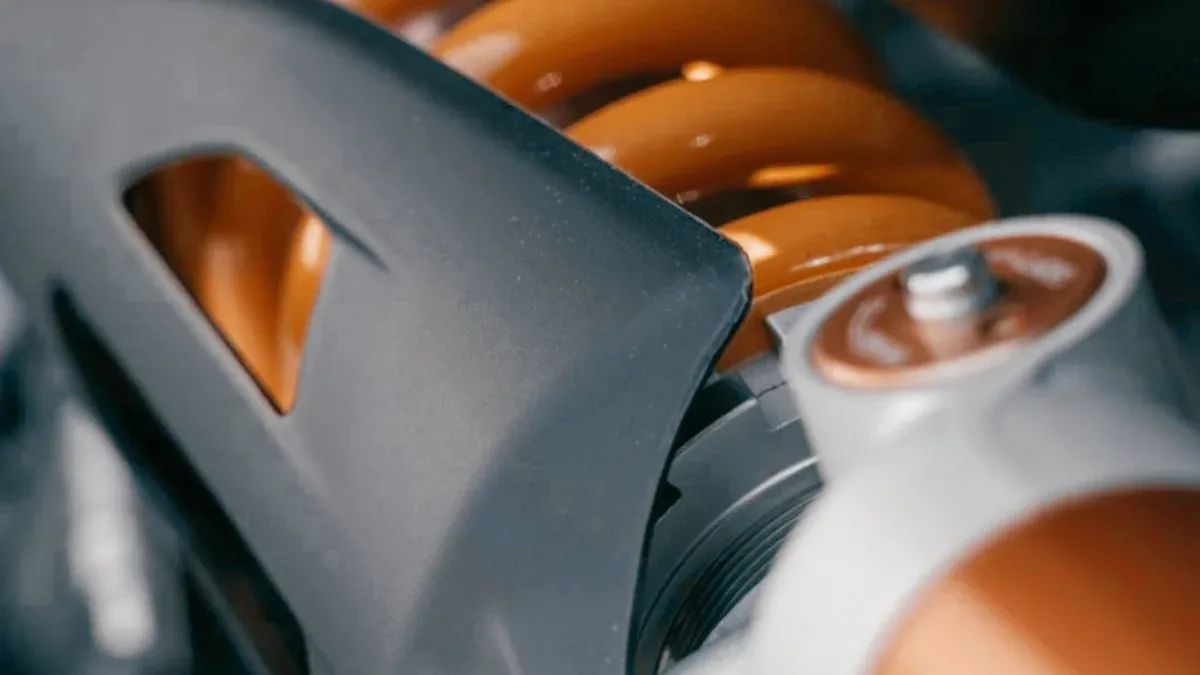
Suspension valving shims are thin, spring-steel discs inside your shock absorber. These crucial [“suspension valving shims”] precisely control fluid flow through your suspension. The shims act as a finely tuned valve. This valving from these shims dictates how your suspension reacts to bumps and turns.
You can unlock incredible performance with the right custom precision shims. These custom precision shims are the key, as each shim contributes to the perfect setup.
Your vehicle’s suspension system is part of a market projected to reach $79.3 billion by 2029. Tuning your shock absorber shims and other suspension shims can improve lap times, proving the power of these small custom precision shims.
How Suspension Shims Create Damping Force
Damping force is the magic that controls your suspension. It turns bouncy spring energy into heat. The suspension shims inside your shock absorber are responsible for creating this force. Your entire suspension system relies on these small discs to manage how your vehicle handles.
The Piston and Fluid Flow
Inside your shock absorber, a piston moves through hydraulic fluid. This piston has holes, or ports, that allow fluid to pass through. You will find a carefully arranged shim stack covering these ports. When your suspension moves, the piston forces fluid against this stack of shims. The fluid pressure must be strong enough to bend the shims and open a path. This resistance from the bending shims creates the damping force that controls your suspension. A thicker shim requires more force to bend, creating more damping. The arrangement of these shims directly tunes your suspension performance.
Low-Speed vs. High-Speed Damping
When tuning your suspension, you will hear about “low-speed” and “high-speed” damping. This does not refer to your vehicle’s speed. It describes the speed of the shock absorber’s shaft.
Pro Tip: Low-speed damping controls slow suspension movements like body roll during cornering. High-speed damping manages fast suspension movements from hitting bumps and potholes.
Experts often define the transition point between low and high speed as a shaft velocity between 1 and 3 inches per second. Some tuners even use a higher point, near 6 inches per second. Different shims in the stack can affect each range, allowing you to fine-tune your suspension for both smooth handling and sharp impact absorption.
Compression and Rebound Circuits
Your suspension moves in two directions: compression (hitting a bump) and rebound (extending back out). These two actions require different amounts of control, so they use separate fluid circuits and valving.
- Compression Damping: This circuit controls the suspension as the wheel moves upward. It primarily manages the unsprung weight of your vehicle, like the wheels and brakes.
- Rebound Damping: This circuit controls the speed at which the suspension extends back to its normal position. It manages the powerful force of the main spring and the vehicle’s sprung weight.
The suspension valving shims in each circuit are independent. This separation allows you to use specific custom precision shims for compression and different custom precision shims for rebound. Getting this balance right with the correct shims is critical for ultimate performance and ride quality. These custom precision shims give you precise control over your suspension’s behavior.
Understanding the Shim Stack
The individual shims work together in a group. This group is called the shim stack. Understanding how you arrange these shims is the key to effective suspension tuning.
What is a Shim Stack?
You can think of a shim stack as a carefully arranged pyramid of thin, flexible shims. You place this stack over the piston ports inside your shock absorber. When fluid pushes against the stack, the shims bend away from the piston, allowing fluid to pass. The specific order, diameter, and thickness of the shims in the shim stack control how much force is needed to open this pathway. This arrangement directly dictates your suspension’s damping characteristics. The right combination of shims creates the perfect suspension feel.
The Role of the Clamp Shim
The clamp shim is the final and most important shim in the stack. It has the smallest diameter and sits right against the piston face, acting as the pivot point for all the other shims. The size of this single shim dramatically changes the stiffness of the entire shim stack. A smaller clamp shim allows the other shims to bend more easily, making the suspension softer. A larger clamp shim restricts bending, making the suspension stiffer.
Tuner’s Insight: Changing the clamp shim diameter is one of the most effective ways to adjust overall damping force.
Look at how a small change in the clamp shim impacts damping performance:
| Modification | Dyno Results (Damping) | Overall Stiffness |
|---|---|---|
| Swapped 23mm to 18mm clamping shim | Decreased by 34% | More flexible |
This shows that reducing the clamp shim diameter significantly softens the entire suspension setting.
Progressive vs. Linear Stacks
You can arrange the shims in the stack to create different damping curves. The two most common arrangements are linear and progressive. Your choice here defines how the suspension reacts to different impacts.
- Linear Stack: This is a simple pyramid shape where each shim is slightly smaller than the one below it. It creates a predictable damping force that increases steadily with suspension speed. This setup gives your suspension a consistent and connected feel.
- Progressive Stack: This stack is more complex and often uses a “crossover” shim to create a gap. This design allows the suspension to be soft on small bumps but then ramp up in stiffness to resist bottoming out on large hits. This advanced valving is where custom precision shims truly shine, allowing you to fine-tune both comfort and big-hit performance. The right suspension shims and suspension valving shims make this possible. You can achieve a truly dialed-in ride with custom precision shims.
Common Types of Suspension Valving Shims

You will find several types of suspension valving shims inside a shock absorber. Each type of shim has a specific job. Understanding these different suspension shims helps you create the exact suspension feel you want. The three most common shims you will work with are standard, ring, and bleed shims.
Standard (Flat) Shims
Standard shims are the foundation of nearly every shim stack. These are simple, solid, flat discs that come in various diameters and thicknesses. You use these shims to build the main body of your stack and control the overall damping force of your suspension.
- They are the most common type of shim.
- You stack them in a pyramid shape to create a linear damping curve.
- Changing their thickness or diameter directly adjusts suspension stiffness.
Think of these shims as the primary building blocks. The right combination of these standard shims is essential, but you can achieve even greater control by adding custom precision shims to the mix. Your suspension relies on these fundamental shims.
Ring (Crossover) Shims
Ring shims, also called crossover shims, look like washers with a large center hole. You place a ring shim within the stack to create a gap between two groups of shims. This gap creates a two-stage damping effect for your suspension.
Tuner’s Tip: A ring shim allows the initial group of shims to flex easily for low-speed movements, providing a softer ride. Once the suspension compresses enough to close the gap, the entire stack engages, creating a much stiffer high-speed valving.
This design lets you tune for both comfort and big-hit control. Using custom precision shims as crossovers gives you precise authority over where your suspension transitions from soft to firm. These shims are key to building a progressive suspension setup.
Bleed (Notched) Shims
Bleed shims are special shims that have small notches or cutouts on their edge. You typically place this shim directly against the piston face. The notches create a small, permanent opening that allows a tiny amount of fluid to “bleed” past the shim stack, even when the suspension is moving very slowly. This constant flow softens the initial suspension movement and improves ride comfort over small chatter. Using custom precision shims with specific notch sizes allows you to fine-tune low-speed damping without affecting high-speed stiffness, giving your suspension a plush feel.
Shim Materials and Key Properties
The material of your shims determines their strength and lifespan. You need shims made from high-quality steel so they can bend thousands of times without breaking or losing their shape. The right material ensures your suspension performs consistently.
High-Carbon Spring Steel
Most suspension shims are made from high-carbon spring steel. This material is the industry standard for a good reason. It is incredibly strong and has excellent “memory,” meaning it can flex and return to its original flat shape repeatedly. This durability is essential for the demanding job inside a shock absorber. These shims provide reliable performance for your suspension. We ensure the quality of all shims through rigorous testing on equipment like hardness testers and metallography analyzers.
Sandvik Steel: The Premium Option
For the highest level of performance, tuners often turn to shims made from Sandvik steel. This is a premium-grade stainless spring steel known for its superior fatigue resistance and consistency. Sandvik shims can withstand more stress and heat, making them ideal for racing and heavy-duty applications. When you build a suspension with custom precision shims, using a premium material ensures every component delivers maximum performance and longevity. These high-quality shims are a key part of a top-tier suspension setup.
The Impact of Thickness and Diameter
The two most important physical properties of a shim are its thickness and diameter. These two dimensions give you control over the stiffness of your suspension. Changing them even slightly can dramatically alter your vehicle’s handling.
Thickness has the biggest effect on the stiffness of the shims. The relationship is not linear; it is exponential.
A shim’s stiffness is roughly proportional to its thickness cubed. This means doubling a shim’s thickness makes it about eight times stiffer.
Diameter also changes how the shims flex. A larger diameter shim bends more easily, which creates a softer feel for the suspension. Because the math is complex, tuners use “shim factors” to simplify conversions. These factors show how much stiffer a shim is compared to a baseline 0.10 mm shim.
- .10 mm = 1.0
- .15 mm = 3.4
- .20 mm = 8.0
- .25 mm = 15.6
- .30 mm = 27.0
Using these factors, you can easily calculate how to swap different suspension shims to achieve your desired stiffness. This is where custom precision shims allow for incredibly detailed tuning of your suspension. The right custom precision shims give you ultimate control.
Tuning Shims for Different Applications
The true power of shims comes from tuning them for a specific purpose. Your goals for a daily driver are very different from those for a race car. You can tailor your suspension system by changing the arrangement of shims. This section explores common setups for different driving styles. This is a critical application of suspension knowledge.
Street and Comfort Setups
For a daily-driven vehicle, comfort is usually the top priority. You want a suspension that absorbs bumps and road imperfections, creating a smooth and pleasant ride. This requires a softer valving setup that allows the suspension to move more freely.
The key to comfort is allowing the shock to absorb small, frequent bumps easily. This keeps your tires in constant contact with the road and makes minor road flaws almost unnoticeable.
When you drive over small bumps, the shock shaft moves slowly. This creates low fluid pressure. In a comfort-oriented setup, the largest and most flexible shims bend with little effort. This allows a controlled amount of fluid to pass, resulting in a soft response. Lighter setups benefit from a softer shim stack, which enhances comfort over rough surfaces. You achieve this by using thinner shims. These shims create a more forgiving suspension.
Here is a simple guide for a comfort-focused setup:
| Driving Style | Recommended Shim Setup | Desired Outcome |
|---|---|---|
| Daily Driving | Thinner, softer shims | Smooth ride, absorbs bumps |
| Highway Cruising | Soft low-speed valving | Reduces vibration and chatter |
To achieve this soft ride, you should:
- Use thinner shims in your main stack.
- Consider using a smaller diameter clamp shim to increase flexibility.
- Incorporate a bleed shim to soften the initial suspension movement.
These adjustments ensure your suspension provides excellent ride quality without feeling harsh. The right combination of shims delivers a superior comfort performance.
Performance and Track Day Builds
When you take your car to the track, your priorities shift from comfort to control. You need a suspension that minimizes body roll, provides sharp handling, and gives you clear feedback from the road. This requires a much firmer shim stack. Stiffer shims resist fluid flow, creating the damping force needed to manage aggressive weight transfer during cornering, braking, and acceleration.
For high-performance applications, you often want firm damping at low shaft speeds. This helps control the car’s body movements and provides a sporty, connected feel. However, you still need the suspension to absorb large bumps, like hitting a curb on the track, without upsetting the car. This is where a digressive valving strategy is effective.
Tuner’s Insight: A digressive setup is firm for small, slow movements but softens on big, fast hits. This gives you the control you need in turns while preventing harshness over bumps, keeping the tires planted.
To build a performance-oriented stack, you will typically:
- Use thicker shims to increase overall stiffness.
- Use a larger diameter clamp shim to make the stack firmer.
- Arrange the shims to create a digressive curve, often with a crossover shim.
This type of shock tuning allows you to push your vehicle to its limits with confidence. The right custom precision shims are essential for dialing in the perfect balance between control and compliance, which is critical for achieving maximum performance on the track.
Off-Road and Rally Configurations
Off-road driving presents the most extreme challenge for a suspension. You need a system that can soak up everything from small rocks to massive jumps. Off-road shock absorbers must handle incredibly high shaft speeds and dissipate a tremendous amount of heat. The shim stack is at the heart of this capability.
The goal for an off-road suspension is a highly progressive damping curve.
- Initial Softness: The suspension needs to be soft enough at first to maintain traction over uneven and loose surfaces.
- Mid-Stroke Support: As the suspension compresses further, the damping must increase to provide support and prevent the vehicle from feeling uncontrolled.
- End-Stroke Firmness: The valving must become extremely firm at the end of the travel to prevent the suspension from bottoming out harshly after a jump or G-out.
You create this curve using a complex arrangement of shims, including multiple crossover gaps. These custom precision shims allow the stack to engage in stages, dramatically increasing stiffness as shaft speed and travel increase. Rebound damping is also critical; it must be strong enough to control the powerful springs needed for off-road use but fast enough to keep the tires on the ground. Using custom precision shims gives you the precise control needed to build a durable and effective off-road suspension. These suspension shims are the key to conquering tough terrain.
A Basic Guide to Modifying Shims
Modifying your shim stack is the ultimate step in suspension tuning. You can directly change how your vehicle handles by rearranging, adding, or removing shims. This process requires patience, precision, and the right tools. It lets you create a truly custom setup for your specific needs.
Warning: Disassembling a shock absorber can be dangerous. Many shocks are pressurized with nitrogen. Always follow the manufacturer’s service manual. If you are unsure, seek help from a professional suspension tuner.
To get started, you will need a clean workspace and some specialized tools. Having the correct equipment prevents damage to the shock and ensures you can reassemble it correctly. Many tuners acquire or make their own tools for the job.
Here are some of the essential tools for the task:
- Shaft and Hex Nut Sockets: You need these to securely hold the shock shaft and remove the nut that holds the piston and shim stack in place.
- Modified Socket or 3-Pin Wrench: Some shock designs require a special tool to remove the seal head or other components. You might need to modify a socket or use a pin wrench to fit specific parts.
- IFP Valve Tool: You need this to properly set the pressure in the Internal Floating Piston (IFP) chamber after reassembly.
- Digital Caliper: A caliper is crucial. You use it to measure the thickness and diameter of each individual shim. This helps you document your starting point and verify the new shims you install.
Once you have your tools, you can begin the modification process. The key is to be methodical and make small, deliberate changes.
A Simple Modification Example
Let’s say you want to increase your low-speed compression damping for better cornering control. You can achieve this by making the shim stack stiffer.
- Disassemble: Carefully take the shock absorber apart according to its service manual.
- Document: Lay out the existing shims in the exact order you removed them. Use your caliper to measure and write down the thickness and diameter of every single shim. This record is your baseline.
- Modify: Make one small change. A great starting point is to swap one shim for a slightly thicker one. Using custom precision shims ensures your changes are accurate.
- Reassemble: Carefully put the new stack together and reassemble the shock, ensuring you torque everything to the correct specifications.
The table below shows a simple change and its effect. You replace one shim in the stack with a thicker one.
| Original Shim | New Shim | Expected Result |
|---|---|---|
| 0.20mm | 0.25mm | Firmer damping, more control |
This single change makes the entire stack harder to bend. It increases damping force. After making a change, you must test your vehicle to feel the difference. This iterative process of changing the suspension shims and testing is the heart of tuning. Using high-quality custom precision shims gives you the confidence that your adjustments are precise. The goal is to use these custom precision shims to perfectly match the suspension’s behavior to your driving style.
You now understand that suspension valving shims are the key to custom suspension tuning. Your knowledge of each shim type and material empowers you to dial in performance. The shim stack is the brain of your suspension, controlling every reaction. Using custom precision shims allows you to perfect the valving for any application. The future of suspension performance points toward even greater control.
Future suspension systems will feature:
- Active and predictive technology that uses AI to anticipate road conditions.
- Lightweight materials like carbon fiber to improve efficiency.
- Deeper integration with vehicle electronics for optimal performance.
Mastering the shim stack and suspension shims prepares you for the next generation of suspension technology. The right type of custom precision shims will continue to define the ultimate suspension system.
FAQ
Can I reuse old suspension shims?
You should avoid reusing old shims. Shims can bend or fatigue over time, which changes their stiffness. For consistent and predictable performance, you should always use new, high-quality shims when you rebuild your shock absorbers. This ensures your tuning adjustments are accurate.
What is the difference between digressive and progressive valving?
These terms describe how damping force changes with shock speed.
- Progressive: Damping starts soft and gets much firmer on big hits. You use this for off-road setups.
- Digressive: Damping is firm at low speeds for control but softens on fast hits. You use this for track performance.
How do I know if my valving is wrong? 🧐
You can feel incorrect valving when you drive. A harsh ride over small bumps points to overly stiff low-speed damping. If your car bounces after a bump or feels uncontrolled in turns, your rebound damping may be too soft.
Where can I buy high-quality shims?
You need a specialized supplier for reliable shims.
We provide a wide range of TS17040 certified custom precision shims. Our engineers can also offer technical support to help you find the perfect components for your project, ensuring you get the best results.