

On the coilover suspension adjustment knob, “S” stands for “soft” and “H” for “stiff.” You can control the ride feel by adjusting these settings. A “soft” setting makes the ride smoother and better absorbs road bumps. A “stiff” setting improves handling and keeps the vehicle stable during sharp cornering or emergency braking.
Adjusting the coilover suspension settings changes the rebound damping and spring stiffness.
- A stiffer spring and greater damping help the vehicle perform better in performance tests.
- Appropriate spring stiffness improves tire grip and controls vehicle dynamics.
- Understanding these options will help you choose the right setting for your comfort or performance needs.
Key Takeaways
- The “S” setting stands for “Soft.” It provides a smoother ride, helps absorb road bumps, and is suitable for daily driving.
- The “H” setting stands for “Stiff.” It provides better handling, helps improve stability, and is suitable for high-speed driving, especially sharp cornering.
- Changing the shock absorbers will change the vehicle’s handling performance. The “Soft” setting prioritizes comfort, while the “Stiff” setting helps improve vehicle performance.
- Be sure to adjust the front and rear shock absorbers to the same setting. This maintains vehicle balance and ensures driving safety.
- Use the “Soft” setting for daily driving. If you need stronger handling, switch to the “Stiff” setting.
Detailed Explanation of S and H Settings on Coilovers
What Soft (S) Means
Turning the shock absorber knob to the “soft” setting will soften the suspension. Your car will handle bumpy and rough roads with ease. You’ll feel less vibration and a smoother ride. “Soft” mode is suitable for daily driving and long journeys. Because the vehicle responds more gently to uneven surfaces, you’ll experience less fatigue.
Turning the shock absorbers to the “soft” setting will cause the suspension to move more, resulting in a softer response to road bumps. This may lead to greater body roll when cornering and more noticeable pitching during braking.
You’ll find that the vehicle rolls more when cornering and pitches more noticeably during hard braking. This is because the suspension moves a longer distance and reacts more slowly to rapid changes in road surface. While “soft” mode improves comfort, it reduces handling precision.
What Hard (H) Means
Switching the damping knob to “Hard” mode changes the vehicle’s handling characteristics. The suspension becomes stiffer with shorter travel. The vehicle remains stable in corners and feels very smooth at high speeds. “Hard” mode is suitable for high-speed driving or track days. Although you can feel every bump in the road, the vehicle responds quickly and handles exceptionally well.
Hard mode prevents vehicle roll and maintains stability. Comfort is slightly reduced, but handling is improved. Tires may slip on bumpy roads, and you will feel noticeable impacts. This mode is best suited for drivers seeking maximum performance.
- Soft mode (S): Suitable for daily driving, helps reduce fatigue on bumpy roads.
- Hard mode (H): Makes the vehicle more stable at high speeds.
Impact on Ride and Handling
Choosing the right shock absorber stiffness mode will alter the vehicle’s handling. Soft mode makes driving on rough roads more comfortable and relaxed, providing a stable ride, suitable for daily driving. Hard mode makes the vehicle more stable and responsive, especially during high-speed cornering or emergency braking, providing a clearer road feedback.
You should choose the appropriate shock absorber setting based on your driving habits and road conditions. If you are a daily driver, soft mode can maintain smoothness. If you are seeking better performance, hard mode provides stronger handling and stability. It is recommended that you start with soft mode to find the optimal grip, and then adjust the settings according to different needs.
Adjusting S and H on Coilovers

Finding the Adjustment Knob
You can find the adjustment knob on top of each MAX shock absorber. This knob controls the stiffness of the suspension system. Look for a small knob or screw, usually marked “S” (soft) or “H” (hard). The rebound adjustment screw is located on top of the shock absorber. No special tools are needed; you can turn the knob by hand.
Tip: Clean the area around the knob before adjusting it. Dirt can make the knob difficult to turn.
Turning Toward S or H
You can adjust your vehicle’s ride characteristics by rotating the knob. Rotating the knob towards the “S” direction softens the suspension. This setting helps absorb road bumps for a smoother ride. Rotating the knob towards the “H” direction stiffens the suspension. This setting helps the vehicle remain stable during fast cornering or emergency braking.
You will feel a click when you rotate the knob. Each click slightly changes the suspension setting. Count the number of clicks to ensure the settings are consistent on both sides.
Safe Adjustment Tips
You should always adjust the front and rear shock absorbers in the same way. This will maintain the vehicle’s balance. Each time you adjust, make minor adjustments and test drive the vehicle. Never adjust one side to be soft and the other to be stiff. Doing so may result in an unsafe situation.
MAX shock absorbers are designed for easy adjustment and durability. You can change the settings frequently without wearing down the components. If you are unsure which setting to use, start with the middle position. Try adjusting a few notches towards the softer or stiffer side to get a feel for the ride.
Note: Always consult your owner’s manual for specific instructions. If you have any questions, consult a professional.
Choosing Coilover Settings
Comfort vs Performance
You’ll need to decide whether you prioritize a comfortable driving experience or better performance. If you’re driving in the city and want a smooth ride, choose a softer setting. This setting helps the vehicle absorb road bumps, making you feel more relaxed. If you prefer high-speed driving or track days, choose a firmer setting. This will make the vehicle more stable and the steering response more sensitive.
Tip: For everyday use, we recommend choosing the gentle setting. If you need stronger control, you can try a firmer setting.
Adapting to Road Conditions
Road conditions can change from smooth to rough in just a few miles. You should adjust the shock absorber settings according to the road surface changes. On bumpy roads, a softer setting helps the vehicle better handle potholes and cracks. On smooth highways, a stiffer setting provides better handling and less body roll.
You can change the settings at any time as needed. This flexibility helps ensure driving safety and comfort.
Matching Driving Style
When choosing shock absorber settings, your driving style is crucial. If you prefer a smooth and comfortable ride, a softer setting is best for you. If you enjoy sharp cornering and quick braking, a firmer setting will suit your style better. Think about your usual driving habits.
Note: Always test your settings after making adjustments. Make only small adjustments each time and observe how the vehicle feels to drive.
Choosing the right shock absorber settings will allow you to enjoy every drive. Get the comfort and handling you desire every time you hit the road.
Coilover Technology and Types
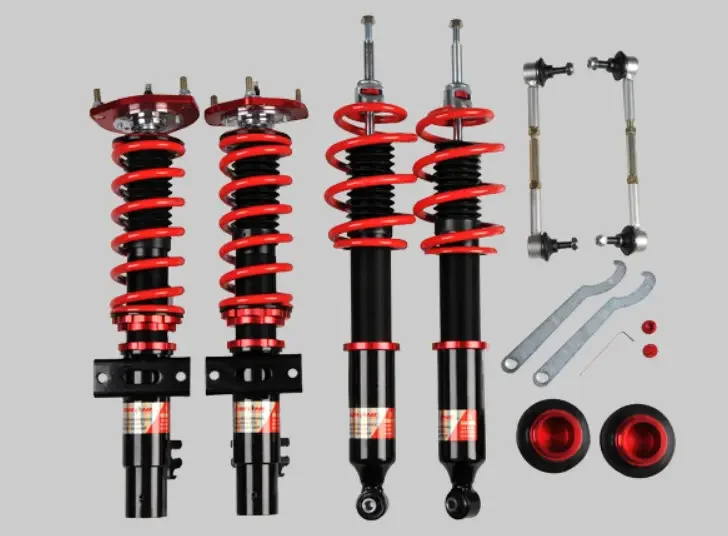
How Coilovers Work
Coilover suspension alters a vehicle’s ride feel and handling. Inside, a piston moves within a fluid system. This movement generates hydraulic resistance. Rotating the knob to the “S” or “H” position changes the level of this resistance. In the “soft” setting, the piston moves smoothly, resulting in a smoother ride; in the “hard” setting, the piston moves more slowly, making the vehicle feel firmer and more responsive to road bumps and cornering. This system allows you to customize the suspension settings to suit your driving habits.
Tip: Adjust the coilover suspension settings to match your desired vehicle handling.
Monotube vs Twin-Tube
You can choose between monotube or twin-tube shock absorbers. Each type has its advantages. Monotube shock absorbers have only one oil/air hose, resulting in faster heat dissipation and quicker response. Twin-tube shock absorbers have two oil/air hoses, offering a more comfortable ride and are also cheaper.
For optimal performance, choose a single-tube exhaust. A dual-tube exhaust is better suited for everyday driving, offering a balance of comfort.
Benefits of MAX Coilovers
MAX coilovers combine handling, comfort, and durability, making them ideal for both everyday driving and track racing. Their unique design helps the tires better grip the road surface, enhancing traction and ensuring driving safety. MAX coilovers are robust and durable, suitable for various road conditions, and easily adjustable to suit your driving style. Many car owners trust MAX’s quality and performance, allowing you to enjoy a smoother ride and better handling every day.
As you already know, in coilover suspension, “S” stands for soft and “H” for stiff. A soft setting makes your ride more comfortable, while a stiff setting helps you control the vehicle better. Choosing the right setting depends on your driving habits. Many people like MAX coilover suspensions because they are easy to adjust and reasonably priced.
Experts recommend starting with a soft setting and then adjusting as needed for faster vehicle response.
| Phase | Action | Purpose |
|---|---|---|
| Street Baseline | Switch to soft mode, take a test drive, and jot down your impressions. | Find your starting point. |
| Performance | Increase the number of clicks to make the bounce more even. | Improve steering and stability. |
| Track | Make slight adjustments to each corner. | Achieve the best result on the track. |
Try different settings to find the one that suits you best.
FAQ
What does S and H mean on coilovers?
You’ll see “S” for “soft” and “H” for “hard”. “Soft” mode provides a smoother driving experience, while “hard” mode improves the vehicle’s handling performance when cornering and braking.
How do I adjust my MAX coilovers?
Turn the adjustment knob on top of the shock absorber. Turn it in the “S” direction for comfort and in the “H” direction for performance. Count the clicks as you turn the knob to ensure the adjustment is consistent on both sides.
Can I switch between soft and hard settings often?
You can change the settings at any time as needed. MAX shock absorbers are designed for easy adjustment and durability. Always test your vehicle after each change.
Which setting is best for daily driving?
A soft suspension setup is best suited for everyday driving. You can reduce the feeling of bumps and enjoy a comfortable ride. A firmer suspension setup is better suited for sporty driving or track driving.
Will adjusting coilovers affect tire wear?
Yes. Proper shock absorber settings help tire grip. If set too stiff or too soft, it can lead to uneven tire wear.