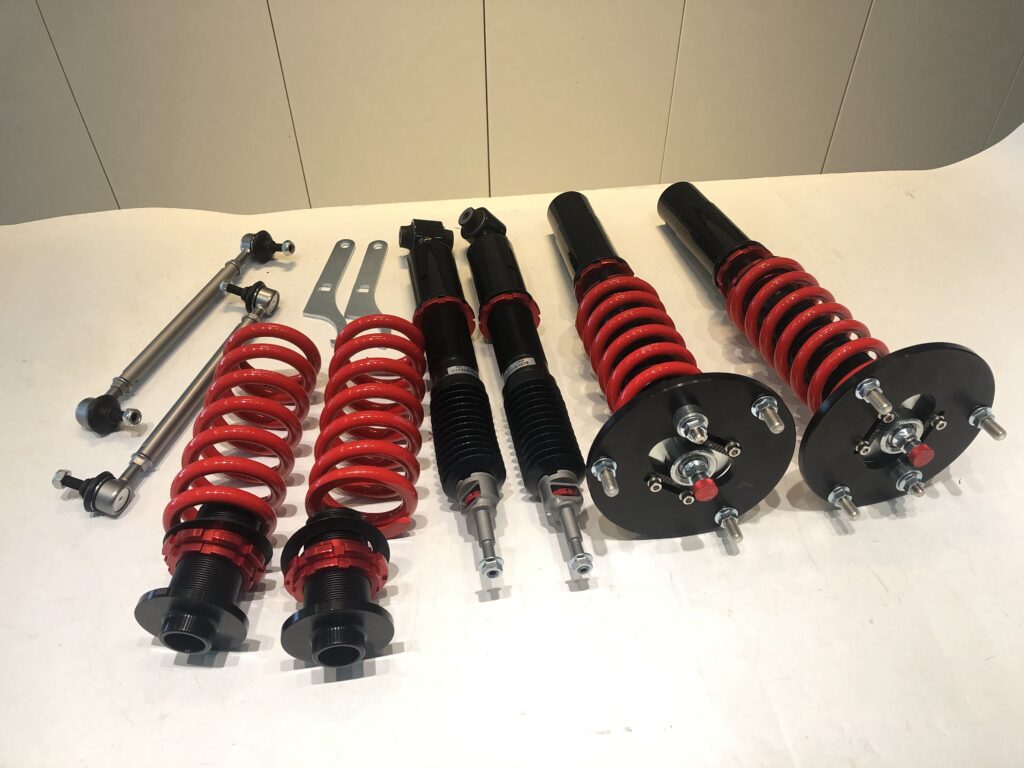
As the most widely used damping component in automotive suspension systems, twin-tube shock absorbers are renowned for their mature structure, low cost and excellent ride comfort. However, under continuous high-frequency impact or heavy-load conditions, the inherent flaw of oil-gas mixing in twin-tube designs becomes prominent, and heat fade has become a bottleneck restricting its performance ceiling. An in-depth analysis of the oil-gas separation mechanism and causes of heat fade in twin-tube shock absorbers, along with exploration of engineering optimization approaches, is of great significance for improving suspension reliability and guiding reasonable modifications.
The internal structure of twin-tube shock absorbers results in a coexisting state of oil and gas. The inner working tube is fully filled with damper oil, while the outer reservoir chamber holds both oil and low-pressure nitrogen (typically only 0.5 to 1 bar). The two chambers are connected via a foot valve at the bottom. Oil can flow freely between them, whereas gas is confined to the top of the reservoir chamber. This design is intended to use low-pressure gas to buffer pressure fluctuations caused by volume changes of the piston rod and reduce manufacturing complexity. Nevertheless, oil and gas cannot be truly isolated during actual operation.
When a vehicle travels on continuously bumpy roads or is driven aggressively, the piston reciprocates at high speed and violently agitates the oil inside the working and reservoir chambers. The low-pressure nitrogen gradually dissolves and emulsifies in the churning oil, forming tiny oil-gas mixtures. Worse still, during the rapid rebound of the piston, the local pressure inside the working chamber drops below the saturated vapor pressure of the oil, triggering cavitation. The oil vaporizes instantly and generates a large number of bubbles. As these bubbles circulate with the oil and pass through the damping valves, they rupture or get compressed at the orifices, drastically reducing the effective flow area and causing a sharp drop in damping force. This is the typical heat fade of twin-tube shock absorbers: the vehicle delivers solid handling at first, but after prolonged use, the body becomes unstable with increased body roll and harsh vibration damping.
Poor heat dissipation is another major cause of heat fade. The reservoir chamber of a twin-tube shock absorber is fully enclosed by the outer tube, forming a closed heat insulation layer. Heat generated during operation can only dissipate slowly from the outer tube surface to the air, featuring a long heat transfer path and limited heat exchange area. Under high ambient temperature in summer or track driving conditions, the oil temperature quickly rises above 100°C, leading to a sharp decline in oil viscosity and further loss of damping force. Tests show that after 30 minutes of continuous high-frequency impact, the damping force of ordinary twin-tube shock absorbers can decrease by 30% to 40%, which seriously endangers driving safety.
Given these structural limitations, engineers have adopted a series of technical improvements to enhance the ultimate performance of twin-tube shock absorbers. First, optimize valve design and oil formulation. Multi-stage composite valve plates and refined orifice geometry deliver more linear damping force at small valve openings and inhibit bubble formation. High-performance anti-foam additives and base oils with high viscosity index are adopted to improve the oil’s resistance to emulsification and high-temperature stability. Second, apply the gas chamber diaphragm technology. Some high-end twin-tube shock absorbers are fitted with flexible rubber diaphragms at the top of the reservoir chamber to physically separate nitrogen from oil. Although this cannot completely eliminate cavitation, it greatly reduces the risk of gas entering the working chamber. Third, adopt external heat dissipation structures. A few performance-oriented twin-tube shock absorbers are equipped with aluminum alloy cooling fins or high thermal conductivity coatings on the outer tube to boost convective heat dissipation.
Nevertheless, the laws of physics cannot be circumvented. The inherent oil-gas mixing structure of twin-tube shock absorbers means heat fade cannot be fundamentally eliminated. Optimized twin-tube units are fully competent for daily commuting, urban driving and occasional mountain road trips, with extremely low maintenance costs. However, for track enthusiasts, off-road drivers and users of heavy-duty commercial vehicles, performance degradation caused by heat fade may pose safety hazards. In such cases, switching to monotube shock absorbers or reinforced versions with external nitrogen reservoirs is a more practical engineering choice.
There are also practical ways to mitigate heat fade during daily use and maintenance. Avoid prolonged continuous hard braking or driving at high speed over rough roads. Regularly check the shock absorbers for oil leakage and damaged dust boots. Use genuine parts conforming to original specifications when replacing components. Do not lower the vehicle body excessively during modifications, as insufficient compression travel will cause frequent impacts between valves and limit stops and accelerate fatigue failure of valve plates. By understanding the physical limitations of twin-tube shock absorbers and using and maintaining them properly, you can maximize their performance throughout the service life and deliver stable and reliable suspension support for every trip.