Abstract
This article discusses the design principles of floating elastic guide bushings, three types of lip seal structures, and the oil scraper ring lubrication system.
Structural Diagram
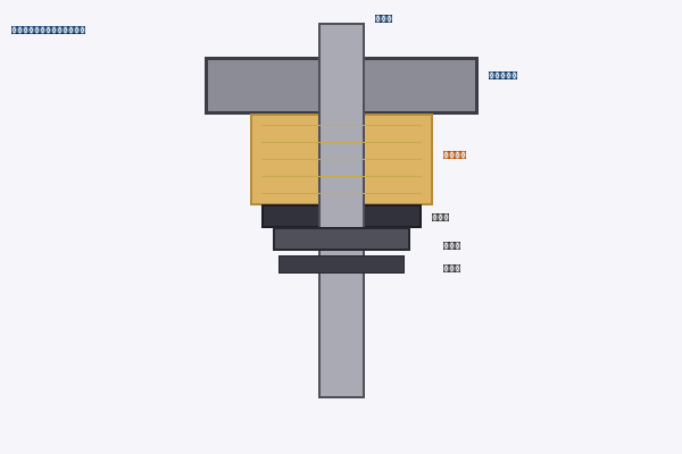
Figure 3: Schematic diagram of the shock absorber guide assembly (oil seal seat) structure (including guide bearing, oil seal, dust cover, and oil scraper ring)
Core Technical Points
- The guide assembly must strike a balance between precise guidance and flexible tolerance to accommodate complex lateral forces.
- The floating elastic guide bushing absorbs off‑center loads, protecting the oil seal from uneven stress distribution.
- A single‑lip seal offers low resistance, a double‑lip seal provides better dust protection, and a stepped lip combines the advantages of both while also improving lubrication.
- The integrated polyurethane oil scraper ring and oil‑storage micro‑cavities enable a self‑sustaining lubrication cycle.
- The complex integrated structure offers strong durability, but the tooling and assembly processes require extremely high precision and are costly.
- The incorporation of rubber vibration‑damping rings blocks high‑frequency vibration transmission and improves NVH (Noise, Vibration, and Harshness) performance.
Detailed Content
During actual operation of a shock absorber, the guide assembly must not only withstand axial alternating loads but also cope with complex multi‑directional lateral forces generated by wheel movement.