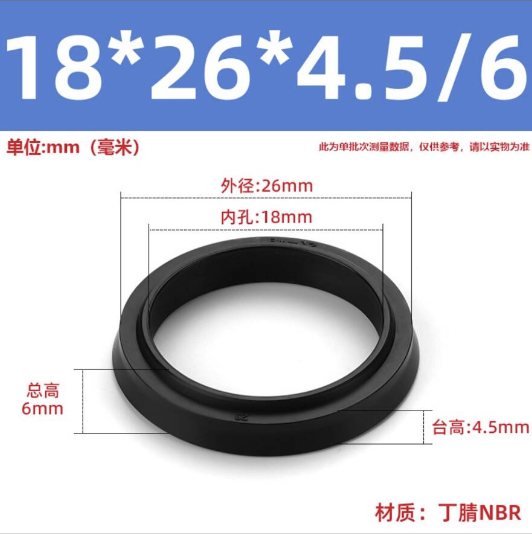
The wiper seal is often overlooked, but it directly affects the service life of the oil seal.
1. What It Is
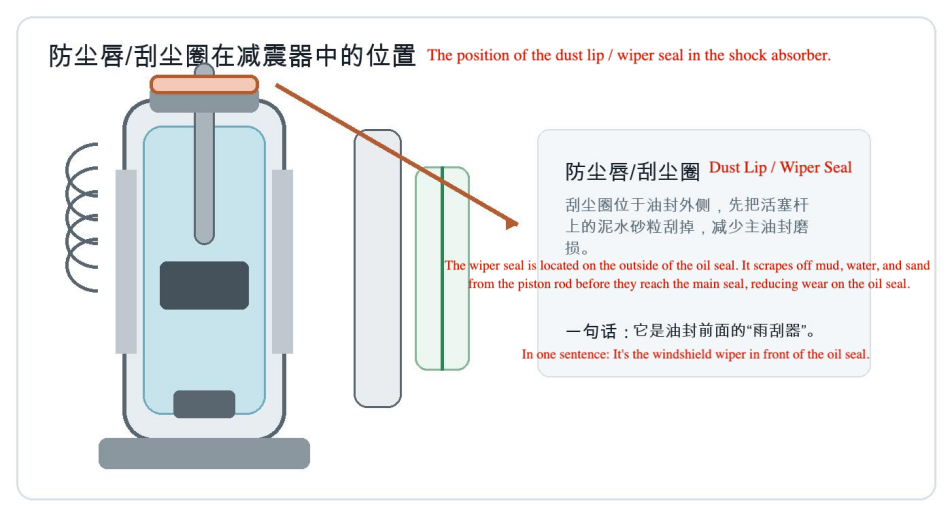
The wiper seal — also called the dust lip or simply “wiper” — is located at the very outer end of the shock absorber. As the piston rod moves in and out, it passes through the wiper seal first, before reaching the main oil seal area.
Analogy for non-technical people:
It’s like the windshield wiper on a car — it sweeps away dirt and debris first, so the glass and mechanisms behind it stay protected and last longer.
2. Common Materials
Material selection is usually not based solely on strength — it also takes into account wear resistance, corrosion resistance, temperature stability, friction characteristics, machining cost, and batch-to-batch consistency.
| Part / Material | Why It’s Used | Points to Watch |
| NBR (Nitrile Rubber) | Oil resistant, moderate cost. | Wear resistance and low temperature performance must be matched. |
| PU (Polyurethane) | Good abrasion resistance and tear strength. | Lip design affects friction. |
| TPE / Engineering plastic | Easy to mold, tunable elasticity. | Temperature and chemical resistance must be verified. |
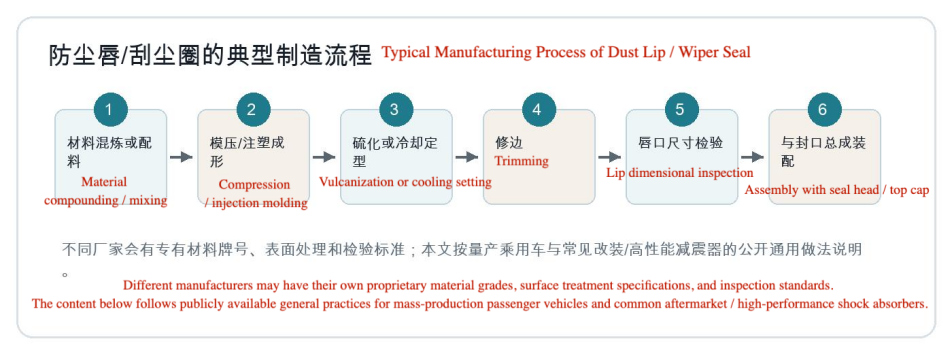
3. Manufacturing Process
4. Functions in the Shock Absorber
- Scrapes water, mud, and sand off the piston rod – removes contaminants before they enter the shock.
- Protects the main oil seal from abrasive wear – prevents premature oil leakage.
- Reduces contaminant ingress – keeps dirt and debris from reaching the internal components.
- Enhances durability in mud, water, and salt spray environments – improves overall longevity under harsh conditions.
5. Differences Between Types
| Type | Characteristics | Functional Differences in Shock Absorbers | Suitable Applications |
| Single-lip wiper seal | Simple construction | Basic dust protection | Standard passenger cars |
| Double-lip wiper seal | More thorough scraping | Better suited for harsh environments | SUVs, off-road vehicles |
| Integrated dust & oil seal | Combines dust protection and sealing | Space-saving | Compact shock absorbers |
6. Quality Control & Common Failure Modes
| Critical Point | Why It Matters | Symptoms of Failure |
| Lip contact pressure | Too low — poor scraping; too high — excessive friction | Contaminant ingress or sluggish movement |
| Abrasion resistance | Long-term contact with rod surface | Lip wears down / becomes rounded |
| Ozone aging resistance | Exposed to outdoor environment | Cracking / splitting failure |
Observable Signs for Users or Maintenance Technicians
- Mud or water reaching the oil seal area on the rod surface – indicates the wiper seal is no longer scraping effectively.
- Increased risk of oil leakage after the dust lip cracks – the damaged lip allows contaminants to reach the main oil seal.
- Lip damage caused by freezing in winter or abrasion from sand and gravel – harsh conditions can crack or tear the lip, compromising its sealing function.
7. Summary
The wiper seal does not seal oil pressure itself, but it determines whether the main oil seal can stay away from mud and sand.
Note: Specific material grades, dimensions, tolerances, and process windows shall be based on the manufacturer’s drawings, technical specifications, and actual part inspection results. This document is intended for training, communication, and basic engineering understanding purposes only.