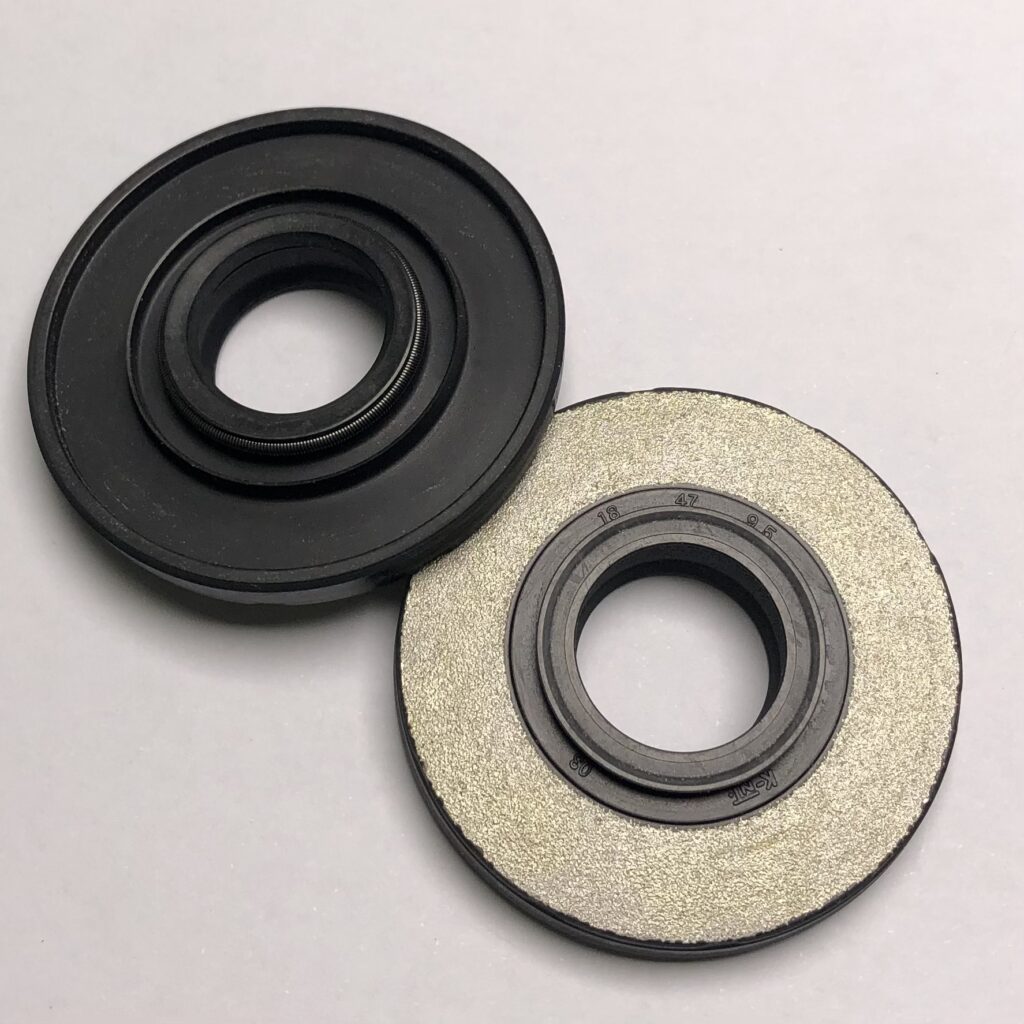
The oil seal is one of the most critical rubber/polymer components for shock absorber service life.
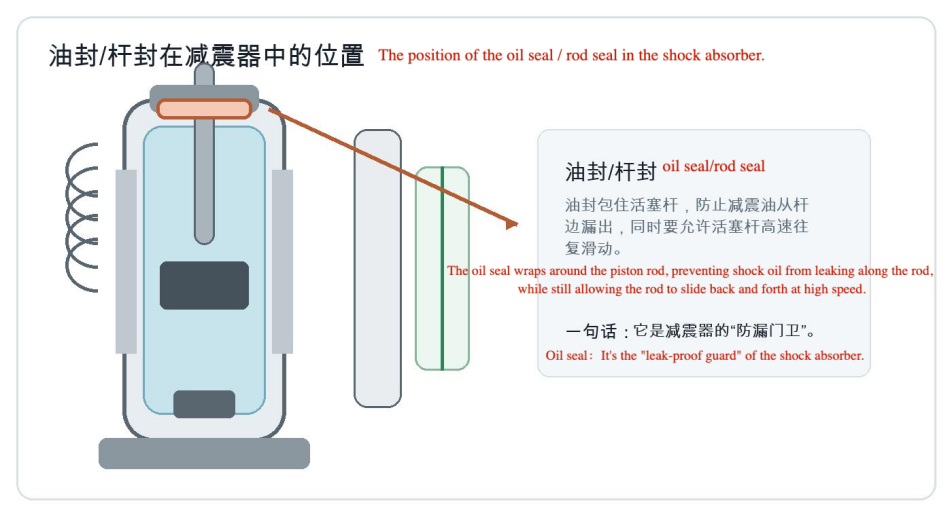
1. What It Is
The oil seal is located at the opening of the shock absorber, with its sealing lip in contact with the surface of the piston rod. It must seal the oil inside while avoiding excessive friction.
Analogy for non-technical people:
It’s like the sealing ring in a faucet — but it works under much harsher conditions, because it has to seal while the rod is constantly moving.
2. Common Materials
Material selection is usually not based solely on strength — it also takes into account wear resistance, corrosion resistance, temperature stability, friction characteristics, machining cost, and batch-to-batch consistency.
| Part / Material | Why It’s Used | Points to Watch |
| NBR (Nitrile Rubber) | Good oil resistance, moderate cost. | Limited resistance to high temperatures and ozone aging. |
| HNBR / FKM | Better resistance to heat, oil, and aging. | Higher cost. |
| PU (Polyurethane) | Good abrasion resistance and tear strength. | Low temperature performance and friction characteristics need to be matched. |
| PTFE composite lip | Low friction, good temperature resistance. | High requirements for assembly and surface finish. |
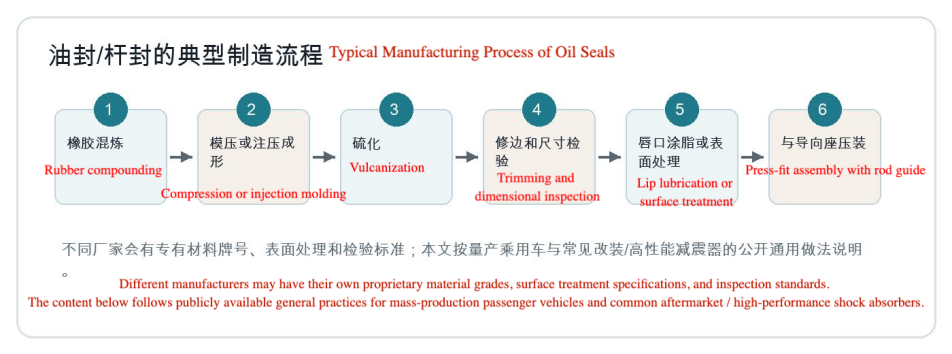
3. Manufacturing Process
4. Functions in the Shock Absorber
Prevents shock oil leakage – keeps the hydraulic fluid inside the shock body.
Maintains internal oil and gas pressure – preserves the sealed pressure state for consistent damping performance.
Blocks moisture and fine contaminants – prevents water, dust, and dirt from entering the shock.
Controls piston rod friction – manages the friction level between the seal and the moving rod for smooth operation.
5. Differences Between Types
| Type | Characteristics | Functional Differences in Shock Absorbers | Suitable Applications |
| Single lip oil seal | Simple construction | Basic sealing | Cost sensitive applications |
| Double lip oil seal | Main sealing lip plus auxiliary dust lip | Improved sealing and contamination protection | Most passenger cars |
| Low friction oil seal | Optimized lip design and material | Enhanced small bump / fine response | High performance shock absorbers |
| High temperature / durable oil seal | Uses HNBR, FKM, etc. | Better thermal stability | Heavy duty, racing |
6. Quality Control & Common Failure Modes
| Critical Point | Why It Matters | Symptoms of Failure |
| Lip geometry / size | Directly determines sealing pressure | Oil leakage or excessive friction |
| Material aging resistance | Affects long term elasticity | Cracking, hardening |
| Rod surface compatibility | Seal relies on smooth rod surface | Wear and oil leakage |
Observable Signs for Users or Maintenance Technicians:
Wet oil traces on the outer wall of the shock absorber – indicates oil seepage past the seal.
Increased friction at low temperatures, reduced sensitivity to small suspension movements – suggests seal material stiffening or lubrication issues.
Accelerated lip wear after mud or sand ingress – contaminants damage the sealing lip and shorten seal life.
7. Summary
The oil seal is the last line of defense in determining whether the shock absorber can maintain its oil and pressure integrity over the long term.
Note: Specific material grades, dimensions, tolerances, and process windows shall be based on the manufacturer’s drawings, technical specifications, and actual part inspection results. This document is intended for training, communication, and basic engineering understanding purposes only.