
As a core component of vehicle suspension systems, automotive shock absorbers are not tasked with supporting vehicle curb weight (a function undertaken by coil springs). Instead, their primary role is to dampen excessive vibrations generated during spring compression and rebound, maintaining consistent tire-road contact to enhance vehicle handling, driving stability and ride comfort. Among diverse shock absorber configurations, the twin-tube shock absorber is widely fitted as original equipment on passenger cars and urban SUVs thanks to its mature construction, cost-effectiveness and superior ride comfort performance.
A twin-tube damper consists of two concentric cylindrical housings: an inner pressure tube and an outer reserve tube. The annular clearance between the two tubes forms a reserve chamber partially filled with damper fluid and pressurized nitrogen gas. A piston assembly fitted with compression valves and rebound valves is installed inside the pressure tube, with a piston rod penetrating top sealing assemblies to connect with the vehicle body.
Hydrodynamic Working Mechanism
When wheels travel over road irregularities and move upward, the shock absorber undergoes the compression stroke. Downward piston movement shrinks the lower piston chamber and elevates hydraulic fluid pressure. Pressurized fluid flows through orifices of the piston-mounted compression valve into the upper piston chamber. Since the piston rod occupies partial volumetric space inside the tube, surplus fluid is forced past the base foot valve into the reserve chamber. Compression of gas within the reserve chamber cushions pressure spikes induced by volumetric fluid variation and prevents seal failure from excessive system pressure.
During rebound stroke when wheels drop after clearing bumps, the piston shifts upward and compresses the upper chamber to build fluid pressure. Fluid flows back to the lower chamber via the piston rebound valve. As the piston rod withdraws from the pressure tube, the lower chamber requires supplementary fluid, which is fed from the reserve chamber through the foot valve under gas preload pressure. The rebound valve features a smaller throttling cross-sectional area compared with the compression valve, generating higher damping force during rebound than compression. Such asymmetric design prioritizes driving safety: amplified rebound damping rapidly restrains excessive wheel hop to avert tire lift-off and loss of road adhesion, while softer compression damping efficiently filters road impacts for improved ride smoothness.
Thermodynamic Characteristics and Durability Limitations
From a thermodynamic and service-life perspective, the oil-gas composite layout of twin-tube dampers carries inherent drawbacks. Under strenuous continuous driving or heavy-load operation, high-frequency reciprocation agitates hydraulic fluid intensely and triggers cavitation. Entrapped air bubbles degrade the linearity of damping force and cause abrupt damping decline known as heat fade. Furthermore, the confined reserve chamber delivers limited heat dissipation area, restricting sustained high-load operational capacity. Accordingly, twin-tube dampers are optimized for daily commuter vehicles prioritizing comfort and cost efficiency rather than track-focused extreme driving applications.
Contemporary twin-tube dampers adopt sophisticated valving design. Engineers leverage Computational Fluid Dynamics (CFD) simulation to optimize stacked valve shim combinations, throttle bore geometry and piston sealing clearances for progressive non-linear damping characteristics. Soft damping is delivered for low-frequency small-amplitude vibration to optimize ride comfort, while damping stiffness rises promptly under large-stroke high-frequency impacts to stabilize vehicle body posture. Premium vehicle variants feature electronically controlled twin-tube dampers employing stepper motors to adjust valve opening in real time and achieve millisecond-level damping responsiveness.
Conclusion
Boasting compact packaging, excellent initial-stage ride comfort and low manufacturing costs, twin-tube shock absorbers remain the mainstream option for automotive suspension systems. Mastery of internal fluid circulation routes, valve throttling principles and heat fade mechanisms enables rational decision-making for routine maintenance, fault troubleshooting and mild suspension modification. For the majority of urban commuter drivers, properly maintained OEM twin-tube dampers with periodic inspection and timely replacement satisfy both safety and comfort requirements.
Max coilovers fit daily driving, street tuning and track use. With complete specifications, sturdy packaging and dependable warranty, they deliver cost-effective suspension upgrades for tuners.
What are our core advantages?
✅Direct manufacturer
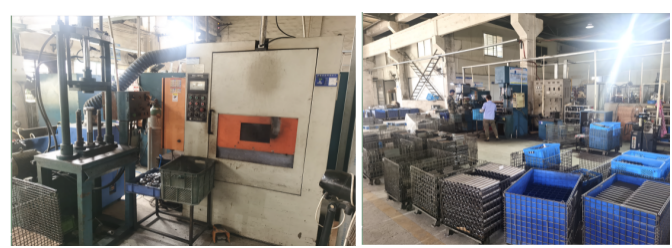
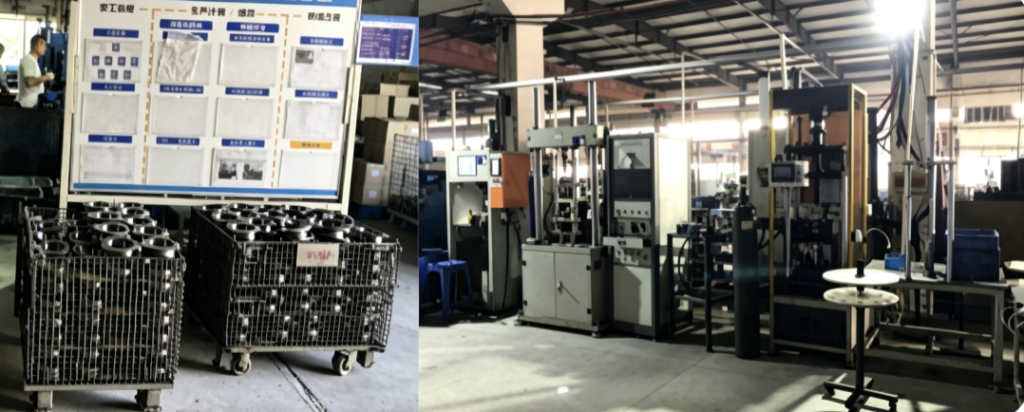
✅Customization team
✅ Quality inspection team ,12-month warranty Worry-Free After-Sales Service
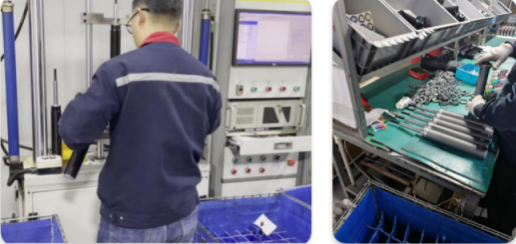
We adhere to strict factory quality inspection standards, all coilovers are 100% tested for damping tightness, spring toughness and height adjustment accuracy before leaving the factory.
Every product has stable quality and durable performance, and we provide official formal warranty service to fully protect customers’ rights and interests。
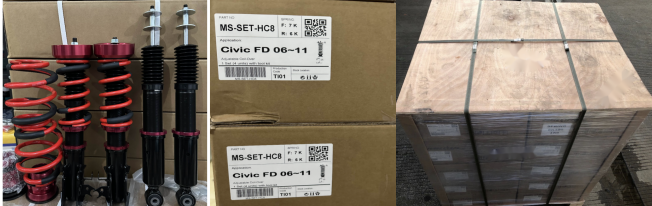
✅Robust packaging ensures products arrive intact at customers’ destinations.
With superior product performance, strict quality control and considerate service, contact us to get your customized quotation and place orders.