The piston rod is one of the most visible yet scratch-sensitive core components of a shock absorber.
1. Definition
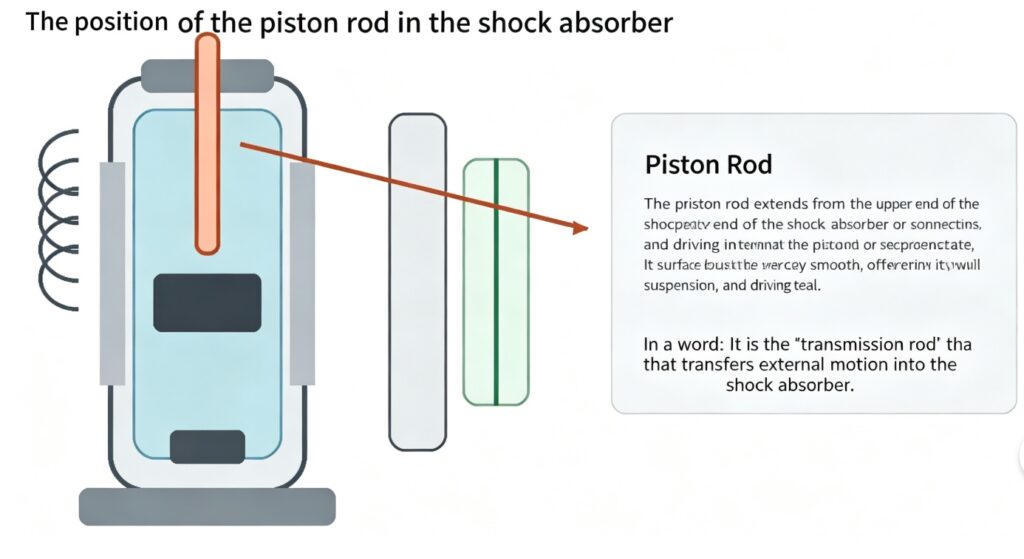
The piston rod is a high-precision metal shaft. Its outer end connects to vehicle mounting structures, while the inner end fastens to the piston assembly. As the vehicle vibrates up and down, the rod drives the piston to reciprocate inside the hydraulic fluid of the working cylinder.
Analogy for non-technical readers: It resembles the plunger of a syringe. A straight, smooth plunger ensures smooth operation; scratches or bending will damage sealing components.
2. Common Materials
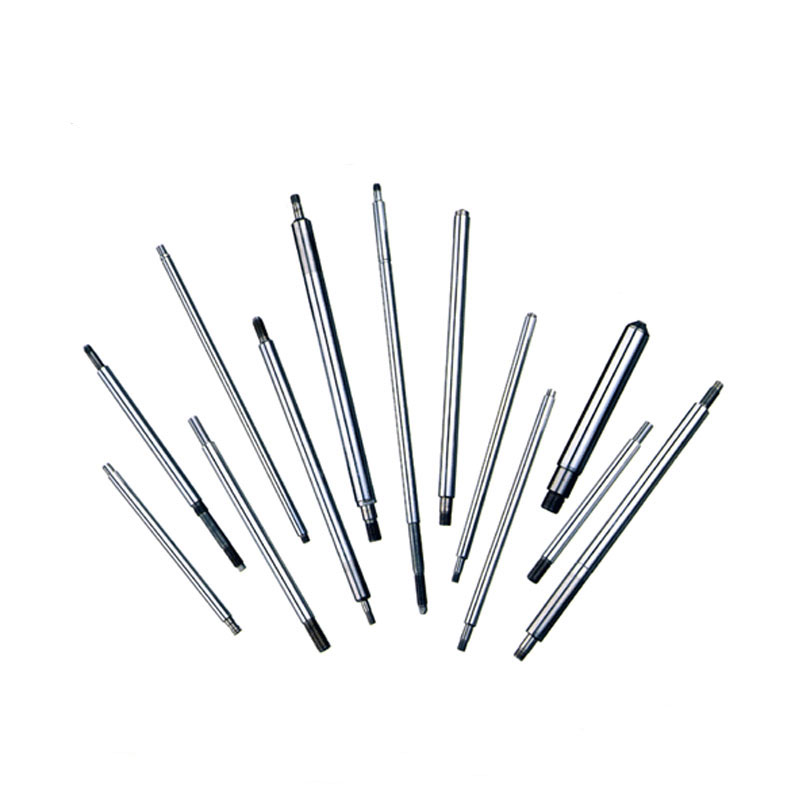
Material selection takes multiple factors into account besides tensile strength, including wear resistance, corrosion resistance, thermal stability, frictional performance, processing cost and mass production consistency.
- Medium carbon steel / alloy steel
- Reason for use: Excellent strength and fatigue resistance to withstand repeated tension, compression and minor side loads
- Key note: Excessively soft material leads to wear; brittle material carries risk of fatigue fracture
- Hard chrome plating or alternative surface coatings
- Reason for use: Boost surface hardness, wear resistance and corrosion resistance, and reduce abrasion on oil seals
- Key note: Pinholes, peeling or abnormal roughness of coating will cause oil leakage
- Anti-corrosion base layer / polished finish
- Reason for use: Protect oil seals under long-term exposure to mud, water and salt spray
- Key note: Tiny rust spots will abrade seal lips like sandpaper
3. Manufacturing Processes
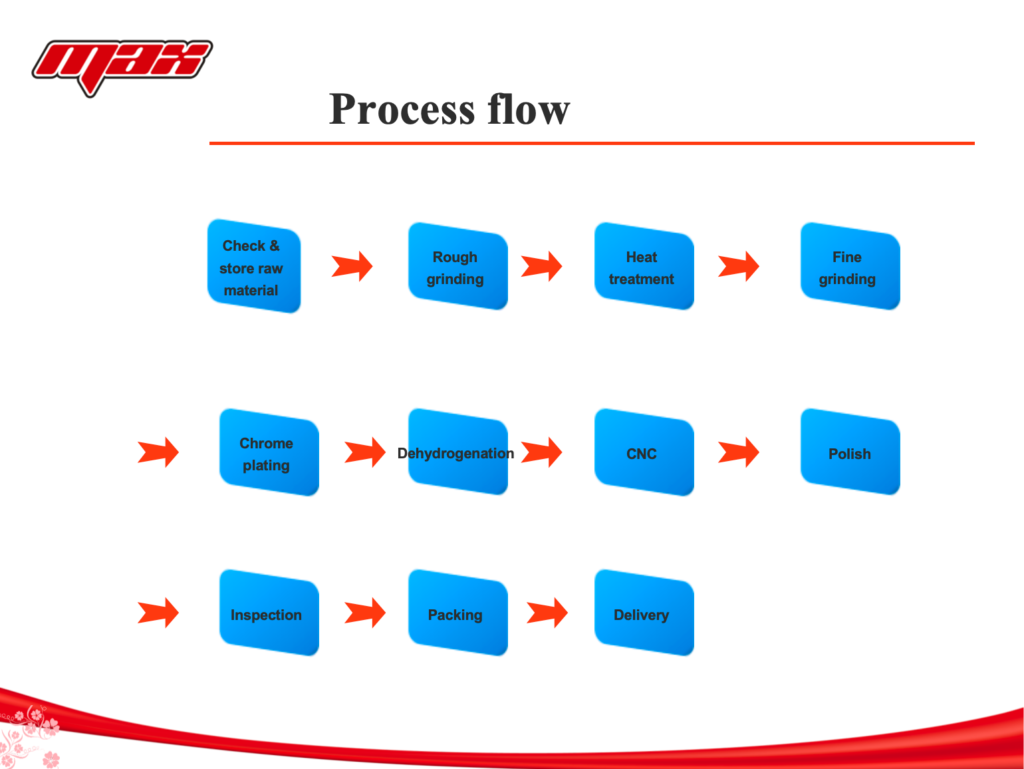
- Bar stock cutting and straightening
- Turning for steps and threads
- Heat treatment or induction hardening
- Centerless grinding for precise diameter control
- Hard chrome electroplating or functional surface coating
- Superfinishing, cleaning and inspection
4. Core Functions in Shock Absorbers
- Transmit suspension movement and drive the internal piston to generate damping force
- Serve as the sliding mating surface for oil seals, determining sealing service life
- Maintain coaxial piston travel and reduce eccentric internal wear
- Bear tension, compression and minor lateral loads at the mounting end
5. Differences Between Various Piston Rod Types
- Standard chrome-plated steel rod
- Features: Widely used on passenger vehicles with balanced cost and service life
- Functional difference: Meets daily wear and anti-corrosion requirements
- Applicable scenarios: OEM factory parts and aftermarket replacement units
- High-strength / Oversized piston rod
- Features: Larger diameter or higher-grade base material
- Functional difference: Improved bending resistance and impact resistance
- Applicable scenarios: Off-road vehicles, heavy-load equipment, performance modifications
- DLC / ceramic coated rod
- Features: Low-friction, high-wear-resistance surface coating
- Functional difference: Reduced friction and heat buildup for faster suspension response
- Applicable scenarios: Premium racing vehicles and special-purpose applications
6. Quality Control & Common Failure Modes
- Straightness
- Importance: Bent rods create uneven stress on oil seals
- Failure symptoms: Oil leakage, mechanical binding, abnormal noise
- Surface roughness
- Importance: Overly rough surfaces abrade seals; overly smooth surfaces fail to retain protective oil film
- Failure symptoms: Premature oil leakage or irregular friction
- Coating integrity
- Importance: Governs anti-corrosion and wear performance
- Failure symptoms: Rust, coating peeling, abrasion damage to oil seals
Observable faults for vehicle users and service technicians:
- Oil stains appear after scratches or rust form on the rod surface
- Bent piston rods from impact cause jerky shock absorber compression
- Accelerated seal abrasion under low temperature or muddy conditions
7. Summary
The performance of a piston rod relies not merely on its thickness, but the integrated combination of tensile strength, straightness, surface hardness, roughness and anti-corrosion capacity.
Disclaimer
Exact material grades, dimensions, tolerances and process windows shall comply with manufacturer drawings, technical specifications and physical part testing. This document is intended for internal training, cross-department communication and fundamental engineering comprehension only.