1. Definition
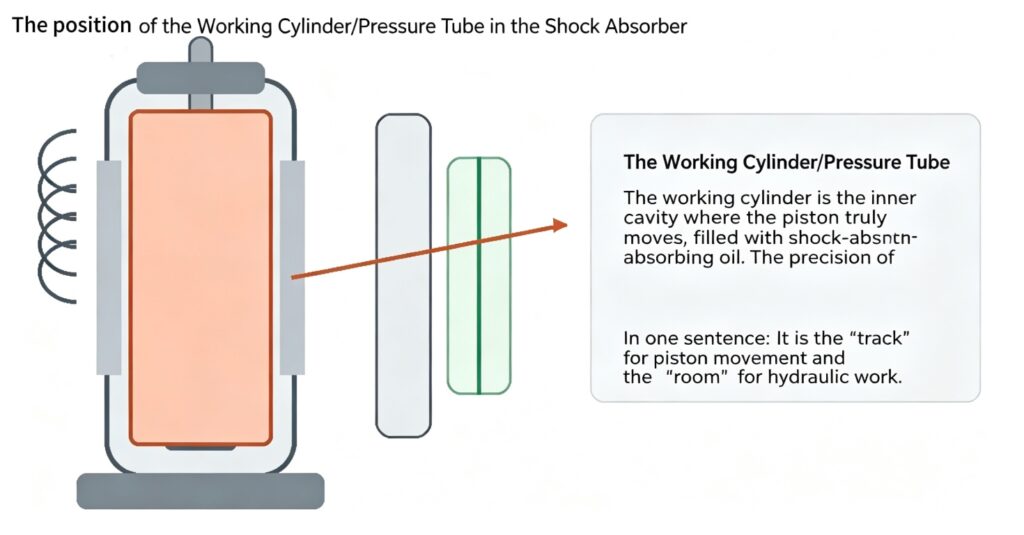
Also known as pressure tube or inner cylinder, the working cylinder is the sliding track for the piston, where hydraulic pressure difference forms on both sides of the piston. For monotube shock absorbers, it acts as the pressure-bearing outer shell; for twin-tube shock absorbers, it is placed inside the outer reservoir cylinder.
Analogy for non-technical staff: It works like the barrel of a bicycle pump. The rounder and smoother the inner wall, the more stable the piston movement.
2. Common Materials
Material selection balances multiple factors beyond tensile strength, including wear resistance, corrosion resistance, thermal stability, frictional performance, processing cost and mass production consistency.
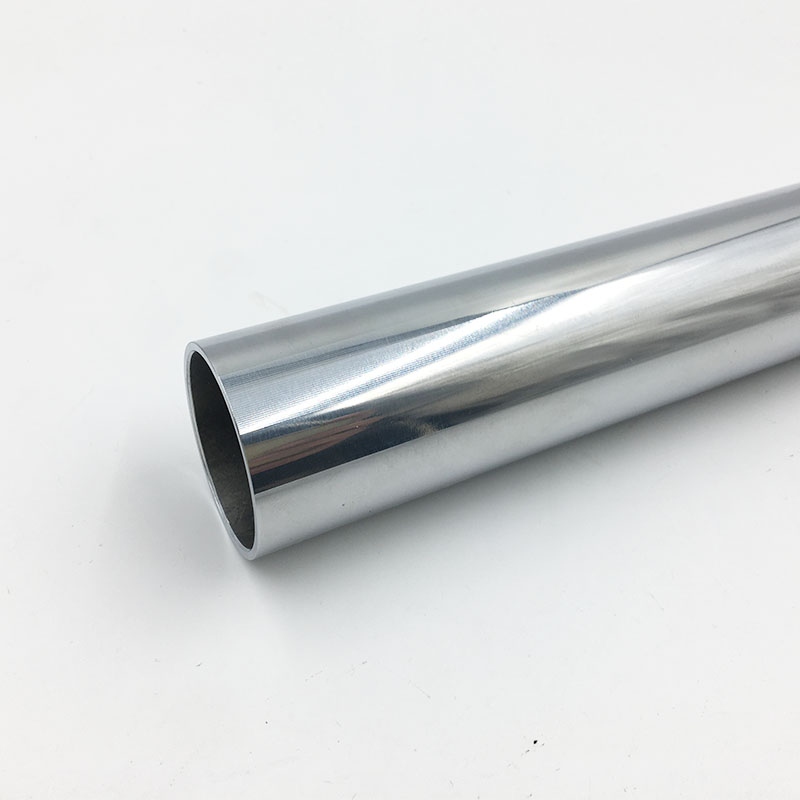
- Precision cold-drawn steel tube
- Reason for adoption: Balanced strength, dimensional stability and cost, ideal for mass production
- Key note: Inner wall defects will damage piston rings and valve assemblies
- Seamless high-strength steel tube
- Reason for adoption: Superior pressure resistance, applicable to high-pressure monotube and heavy-load equipment
- Key note: Higher machining costs
- Aluminum alloy cylinder
- Reason for adoption: Lightweight with excellent heat dissipation, widely used in premium rebuildable shock absorbers
- Key note: Strict surface treatment and wear resistance control are required
3. Manufacturing Processes
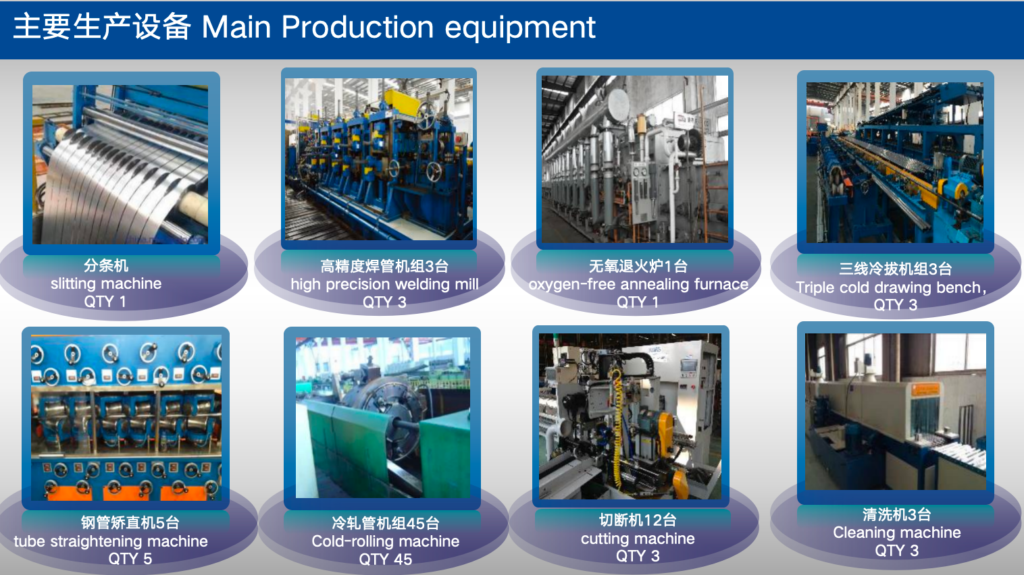
- Tube forming or seamless pipe fabrication
- Cold drawing for precise dimension control
- Pipe cutting and end forming
- Internal honing or roller burnishing
- Chip removal and cleaning
- Anti-corrosion treatment and pre-assembly inspection
4. Core Functions in Shock Absorbers
- Provide precise sliding clearance for the piston
- Withstand hydraulic pressure and maintain internal sealing
- Determine shock absorber friction, response speed and service life
- Transfer heat from hydraulic fluid to reduce thermal fade
5. Differences Between Various Cylinder Types
- Twin-tube inner working cylinder
- Features: Equipped with an external oil storage cylinder
- Functional difference: Only serves as the piston working chamber
- Applicable scenarios: Most mass-market passenger vehicles
- Monotube pressure cylinder
- Features: Directly bears high-pressure oil and gas loads
- Functional difference: Outstanding heat dissipation and instantaneous response
- Applicable scenarios: Performance vehicles, off-road vehicles, modified suspensions
- Rebuildable aluminum alloy cylinder
- Features: Lightweight and easy to disassemble for maintenance
- Functional difference: Supports frequent oil and valve disc replacement
- Applicable scenarios: Race cars, high-end modified shock absorbers
6. Quality Control & Common Failure Modes
- Inner diameter and circularity
- Importance: Governs piston sliding stability
- Failure symptoms: Excessive friction, uneven eccentric wear, fluctuating damping force
- Inner wall surface roughness
- Importance: Protects hydraulic oil film and extends guide band service life
- Failure symptoms: Piston binding, accelerated component wear
- Pressure resistance and weld integrity
- Importance: Prevents pressure-bearing structural failure
- Failure symptoms: Oil leakage, cylinder bulging, tube rupture
Observable faults for vehicle users and service technicians:
- Scratched inner walls cause jerky piston travel
- Cylinder deformation leads to mechanical binding and abnormal noise
- Corrosion or defective welds trigger fluid leakage
7. Summary
Although the working cylinder appears to be a simple tube, it dictates whether the piston can operate at the correct position with stable frictional performance.
Disclaimer
All material grades, dimensions, tolerances and process specifications shall follow manufacturer drawings, technical standards and physical sample testing. This document is for internal training, business communication and basic engineering reference only.