1. What They Are
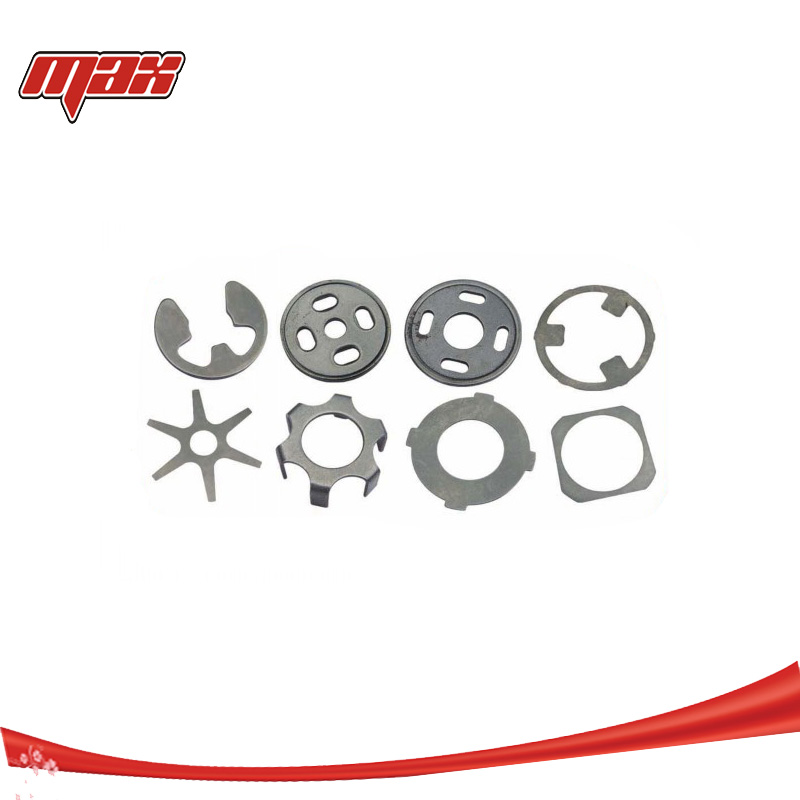
Valve discs are a set of thin spring steel sheets clamped onto the piston or base valve in a specific sequence. Hydraulic fluid pressure bends the discs to create variable flow openings.
Analogy for non-technical readers: They work like a spring-loaded door. A light gust pushes it slightly open, while strong wind swings it wide.
2. Common Materials
Material selection depends not only on tensile strength, but also a balanced combination of wear resistance, corrosion resistance, thermal stability, friction performance, processing cost and mass production consistency.
3. Manufacturing Processes
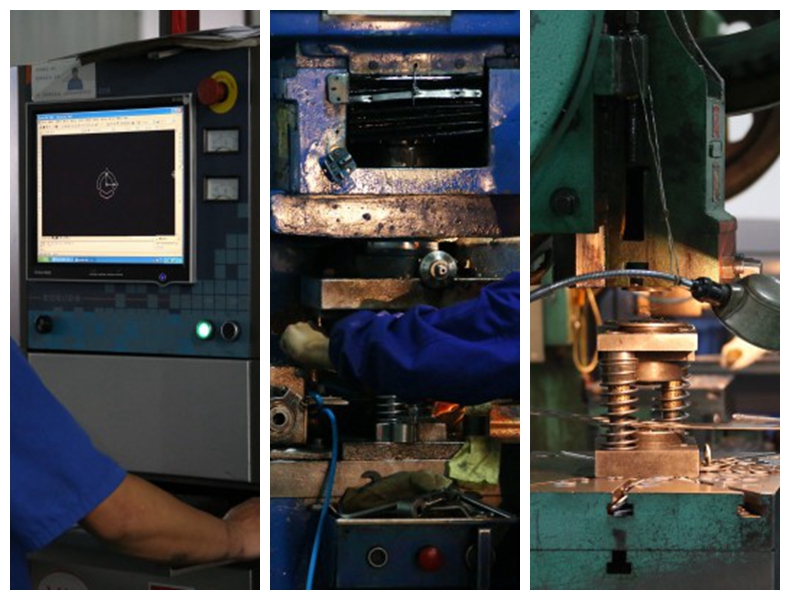
- Precision stamping or laser cutting
- Heat treatment to achieve elastic properties
- Deburring and chamfering
- Sorting by thickness and hardness
- Cleaning and anti-rust treatment
- Assembly according to designated stacking layouts
4. Functions in Shock Absorbers
- Determine the opening pressure of fluid passages
- Separate low-speed damping performance from high-speed damping performance
- Enable independent damping tuning for compression and rebound strokes
- Allow suspension characteristic adjustment by swapping disc stack layouts
5. Differences Between Disc Types
Four Types of Stack Discs (Details Listed Separately)
- Linear Stack Discs
- Characteristics: Uniform variation in disc diameter or thickness
- Functional Difference in Shock Absorbers: Predictable damping build-up
- Suitable Scenarios: Basic calibration
- Progressive Decay Stack Discs
- Characteristics: Easier full opening at high piston speeds
- Functional Difference in Shock Absorbers: Softer response under heavy impact
- Suitable Scenarios: Street vehicles, rally racing, off-road driving
- Progressive Rise Stack Discs
- Characteristics: Stronger support in late-stroke travel
- Functional Difference in Shock Absorbers: Robust high-speed motion control
- Suitable Scenarios: Heavy-load vehicles, special race tracks
- Preload Stack Discs
- Characteristics: Higher initial opening force
- Functional Difference in Shock Absorbers: Firm low-speed body posture support
- Suitable Scenarios: Performance vehicles
6. Quality Control & Common Failures
6.1 Key Control Points (Itemized Breakdown)
- Thickness Consistency
- Why it matters: Directly defines valve opening pressure
- Performance after failure: Uneven left/right damping output
- Burr Control
- Why it matters: Burrs cause cylinder scoring or disc jamming
- Performance after failure: Abnormal noise, erratic damping force
- Disc Stack Order
- Why it matters: Stack sequence defines core calibration parameters
- Performance after failure: Completely altered soft/hard suspension feel
Observable Issues for End Users & Technicians
- Sudden damping drop after fatigue cracking of valve discs
- One-way abnormal damping caused by debris trapped between discs
- Overly stiff or overly soft ride quality due to incorrect stacking order during service
7. One-Sentence Summary
Despite their slim profile, valve discs act as the primary “tuning knob” that shapes the shock absorber’s damping curve.
Disclaimer
Exact material grades, dimensions, tolerances and process windows shall comply with manufacturer drawings, technical specifications and physical part testing. This document is intended for internal training, cross-department communication and fundamental engineering comprehension only.