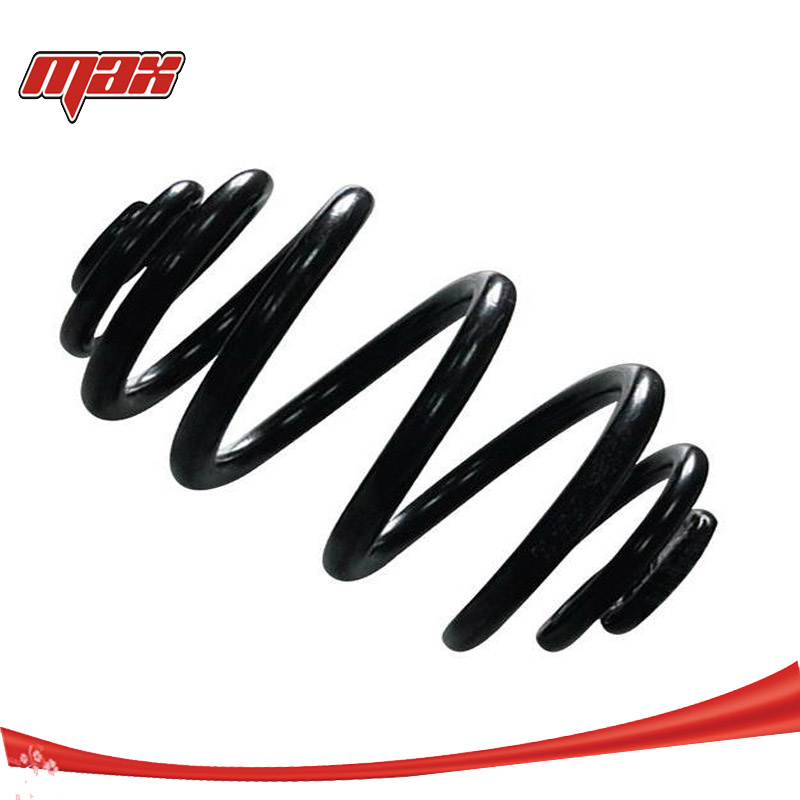
Strictly speaking, coil springs are not internal components of shock absorbers, yet they often work together with strut assemblies.
Coil springs bear vehicle weight and absorb road surface displacement, while shock absorbers restrain excessive spring rebound.In short: springs provide “support”, and shock absorbers deliver “damping control”.
1. Basic Definition
Coil springs are mounted on struts or suspension arms to sustain static and dynamic loads of vehicles. They store and release energy, whereas shock absorbers dissipate energy.
Analogy for non-technical personnel: A coil spring acts like the elastic mat of a trampoline—it cushions impacts, but will bounce endlessly without restraint.
2. Common Materials
Material selection takes into account not only strength, but also wear resistance, corrosion resistance, thermal stability, friction performance, processing costs and mass production consistency.
| Part/Material | Application Advantages | Key Considerations |
| Si-Mn Spring Steel | Excellent elasticity and fatigue resistance | Heat treatment and surface defects are critical |
| Cr-V / Cr-Si Spring Steel | Superior tensile strength and fatigue performance | Higher production cost |
| Anti-Corrosion Coatings | Resist stone chipping, salt spray and moisture | Rust and fracture occur once coating peels off |
3. Manufacturing Processes
Typical production workflow for coil springs:
- Spring steel wire preparation
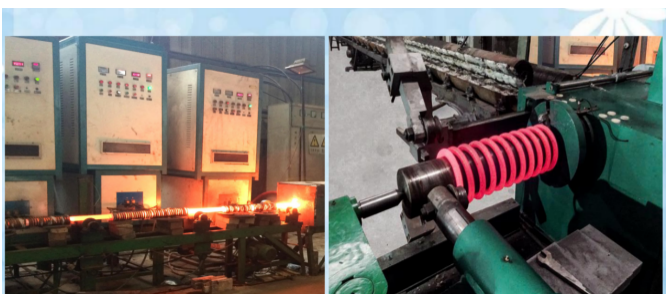
- Hot coiling or cold coiling forming
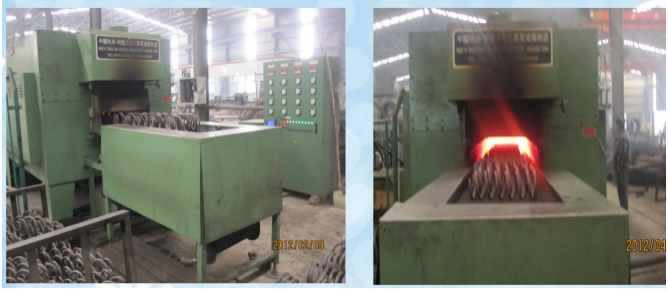
- Quenching and tempering
- Shot peening strengthening
- Pre-setting and shaping
- Powder coating and load sorting
Different manufacturers adopt proprietary material grades, surface treatments and inspection standards. This document elaborates on universal practices for mass-produced passenger vehicles and common modified/high-performance shock absorbers.
4. Functions in Shock Absorber Assemblies
- Support the curb weight of the vehicle body
- Absorb road impacts and store elastic energy
- Determine vehicle ride height, natural suspension frequency and initial ride comfort
- Coordinate with shock absorber damping to define overall vehicle handling performance
5. Differences Between Various Types
| Type | Characteristics | Functional Differences in Shock Absorber Systems | Applicable Scenarios |
| Constant Pitch Spring | Uniform coil spacing | Linear spring rate | Standard passenger vehicles |
| Progressive Rate Spring | Variable coil spacing or wire diameter | Soft response to minor impacts, stiff support under heavy loads | Balanced comfort and load-bearing capacity |
| Lowering Spring | Reduces vehicle ride height | Must be paired with short-stroke shock absorbers | Vehicle modification |
| Air Spring | Load-bearing air bag structure | Adjustable ride height and spring stiffness | Premium sedans and SUVs |
7. Quality Control & Common Failure Modes
| Inspection Item | Significance | Failure Symptoms |
| Load Height | Governs vehicle ride height | Uneven left-right body height |
| Fatigue Life | Withstand repeated compression cycles | Spring fracture |
| Stone-Chip Resistant Coating | Eliminate rust initiation points | Corrosion-induced spring breakage |
Observable faults for vehicle owners and maintenance technicians:
- One corner of the vehicle body sags
- Squeaking or rubbing noises from springs during steering or crossing bumps
- Spring fracture posing severe safety hazards
7. Concise Summary
Coil springs prevent the vehicle body from slamming against the road surface, while shock absorber pistons and valve assemblies suppress uncontrolled spring oscillation.
Disclaimer: Exact material grades, dimensions, tolerances and process parameters shall comply with manufacturer drawings, technical specifications and physical inspection results. This document is intended for training, technical communication and basic engineering comprehension.
Why Choose MAX AUTO Coil Springs?
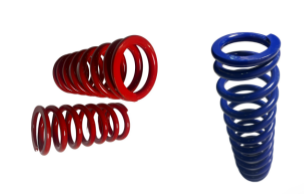
MAX AUTO is a professional spring manufacturer with competitive prices and reliable quality for global customers.
1.Premium Material :
Our coil springs are made of premium materials including 60Si2Mn, 60Si2MnA, 55CrSiA and SAE9254.Backed by strong technical capabilities, first-class production facilities, comprehensive quality assurance systems and advanced testing equipment, we ensure stable product performance.
2.Advanced Production Equipment
Fully automatic computer-controlled spring forming machine
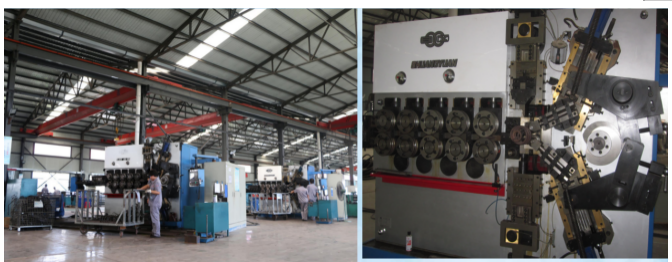
TSL Industrial Resistance Furnace (Quenching)
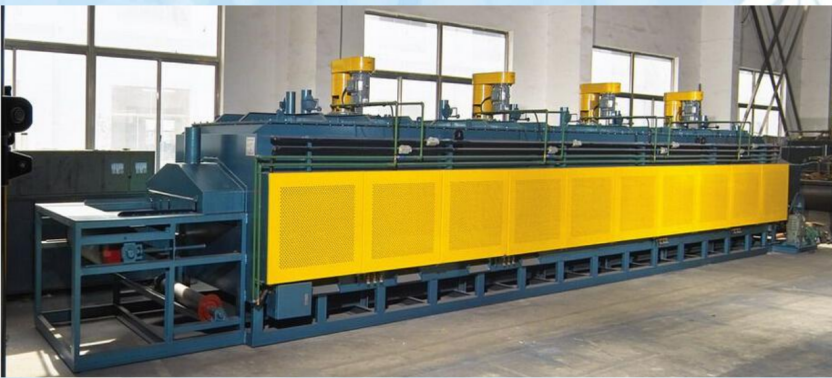
Continuous hot air tempering furnace
Hot roll equipment
Mature craftsmanship & strict quality control
Wire diameter: 0.2mm – 100mm
Custom & standard springs available
Serve automotive, mining, electrical appliance, machinery industries
Full-Scale Quality Testing
3.Professional Testing Workshop
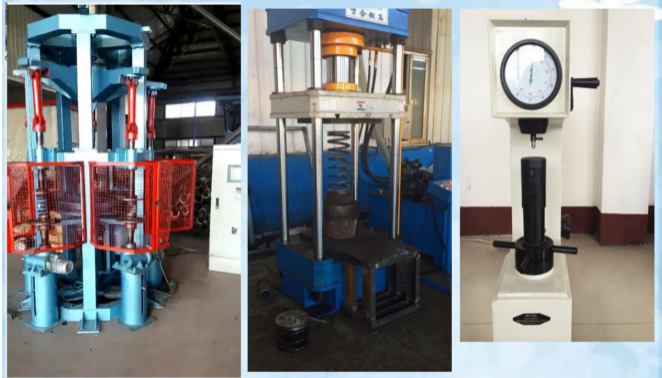
Equipped with professional force value testing instruments and durability test equipment to support whole-process quality monitoring.Each is tested for force value before packing ,100% testing .
4.Fatigue test and pressure test
5.Standard Export Packaging
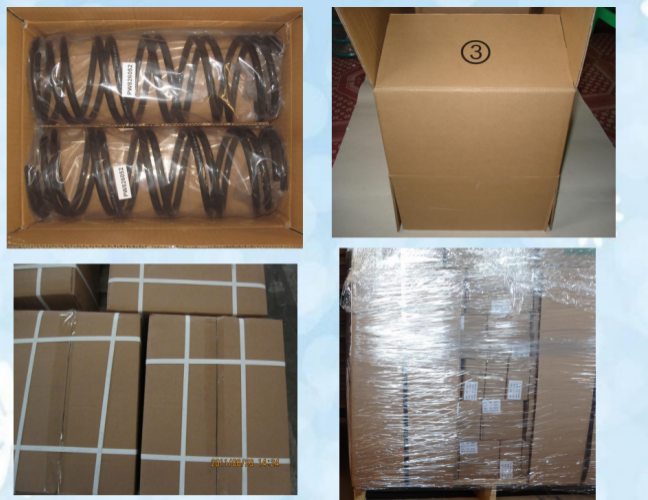
Independent single product packaging, anti-collision foam, carton outer packing and pallet packing. Real packaging photos are available to ensure intact goods during long-distance transportation and sea/land logistics.
Main Products
Automotive suspension coil springs
Hydraulic strut tension return springs
Full range of industrial mechanical springs
Contact us for quotation & custom solutions✔ Competitive Price | ✔ Stable Quality | ✔ Fast Delivery | ✔ Global Supply