Abstract
This paper analyzes three core functions of the guide. It compares the advantages and disadvantages of split-type and integrated structures, and explores the characteristics of different materials for guide bearings. Meanwhile, it studies the generation mechanism of friction and wear, and verifies the optimal material matching scheme. The research indicates that the machining and assembly accuracy of the guide directly affects the NVH performance and full-life reliability of shock absorbers.
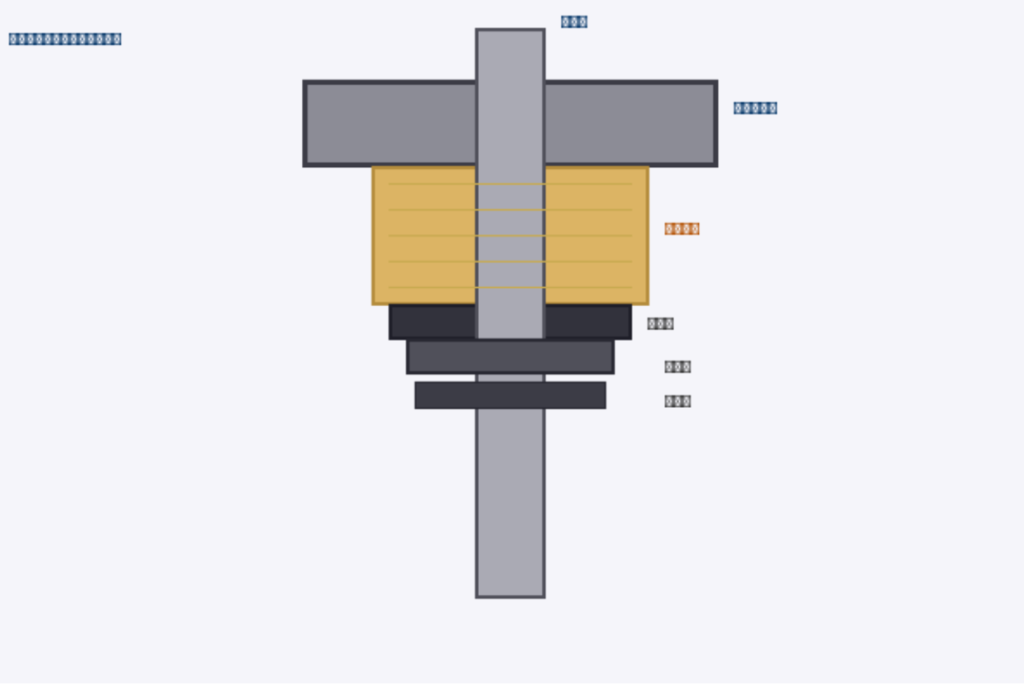
Structure Diagram
Core Knowledge Points
- The guide has three core functions: radial guiding, serving as the mounting carrier for oil seals and bearing lateral forces.
- The split-type structure features flexible assembly, yet it suffers from accumulated clearance errors, which easily cause eccentric wear and oil leakage of oil seals.
- The integrated injection-molded guide housing boasts high rigidity and good concentricity, but it is difficult to repair and replace.
- Sintered bronze bearings can withstand high temperatures but tend to scratch the piston rod under dry friction; PTFE delivers excellent self-lubricating performance with a large coefficient of thermal expansion.
- Metal substrates coated with DLC or molybdenum disulfide are the optimal solution to balance structural strength and friction performance.
- The precision of the guide directly determines the NVH performance and long-term reliability of shock absorbers.
Detailed Content
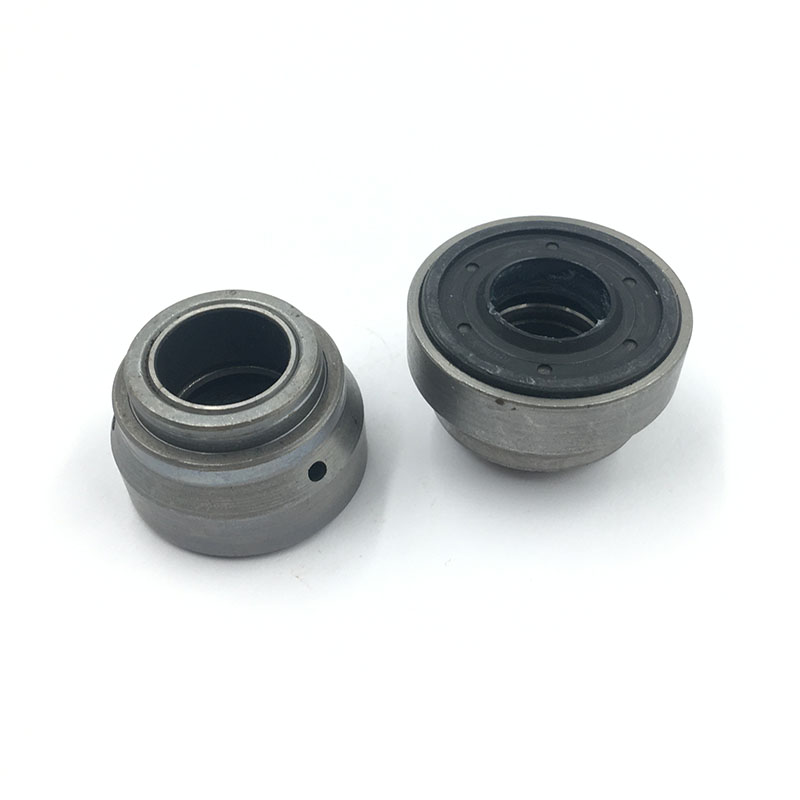
The guide, also commonly known as oil seal housing or piston rod guide housing, is a core positioning component installed at the top of the working cylinder of shock absorbers.
Three Core Functions of the Guide
First of all, it provides accurate radial guidance for the reciprocating piston rod, restricting radial deflection and ensuring smooth linear movement. Secondly, it acts as a dedicated mounting base for oil seals and dust seals, keeping sealing components in correct position and maintaining reliable sealing performance. Thirdly, it bears continuous lateral forces transmitted from wheels during vehicle driving, steering and crossing bumpy roads, so as to protect the piston rod and internal parts from eccentric load damage.
Split-type VS Integrated Structure
Split-type Structure
This structure consists of several separate parts assembled together. It allows flexible production and easy assembly, and worn parts can be replaced individually for lower maintenance costs. However, multiple fitting surfaces will lead to accumulated clearance errors, resulting in poor concentricity during operation. It will further cause eccentric wear of oil seals and eventually lead to oil leakage.
Integrated Structure
The integrated injection-molded guide housing integrates all functional structures into one piece. It features high overall rigidity and excellent concentricity, effectively reducing part deflection, seal wear and operating noise. Nevertheless, due to the high integration, local damage means overall replacement, bringing difficulties to later maintenance and part replacement. Besides, it puts forward higher requirements for mold and injection molding technology.
Tribological Characteristics of Different Materials
The guide bearing is in direct contact with the piston rod, so material properties play a decisive role in friction and wear performance.
Sintered bronze bearings have high mechanical strength and outstanding high-temperature resistance, which are suitable for heavy-duty working conditions. But with poor self-lubricating ability, they are likely to scratch the chrome-plated surface of the piston rod under dry friction.
PTFE material has low friction coefficient and superior self-lubricating property, while its large thermal expansion coefficient will cause dimensional instability in high-temperature environments.
In view of the above defects, metal substrates coated with DLC (Diamond-Like Carbon) or molybdenum disulfide have become the mainstream choice. This composite structure combines high structural strength, low friction, wear resistance and thermal stability, achieving an optimal balance of comprehensive performance.
Summary
As an important assembly integrating guidance, sealing and load bearing, the guide’s structural form and material selection are closely related to the overall quality of shock absorbers. Split-type and integrated structures are applicable to different production and usage scenarios respectively. Each conventional bearing material has its own merits and demerits. The composite coating technology effectively makes up for the deficiencies of single materials.
In actual application, the machining precision, matching clearance and assembly quality of the guide cannot be ignored. They exert a direct impact on vehicle NVH level and the full-service life of shock absorbers. Reasonable structural design and scientific material selection are essential to improve the comprehensive performance and market competitiveness of products.