
Abstract
This paper elaborates on the core functions of the base valve for twin-tube shock absorbers. It compares the structural performance between the traditional spring poppet valve and the modern multi-disc stacked valve, and analyzes the application advantages of powder metallurgy valve seats in base valve assemblies. Meanwhile, it sorts out the evolution track of base valve structures along with vehicle performance upgrading, and summarizes the technical improvements for solving common faults such as fluid backflow, abnormal noise and internal leakage.
Structure Diagram
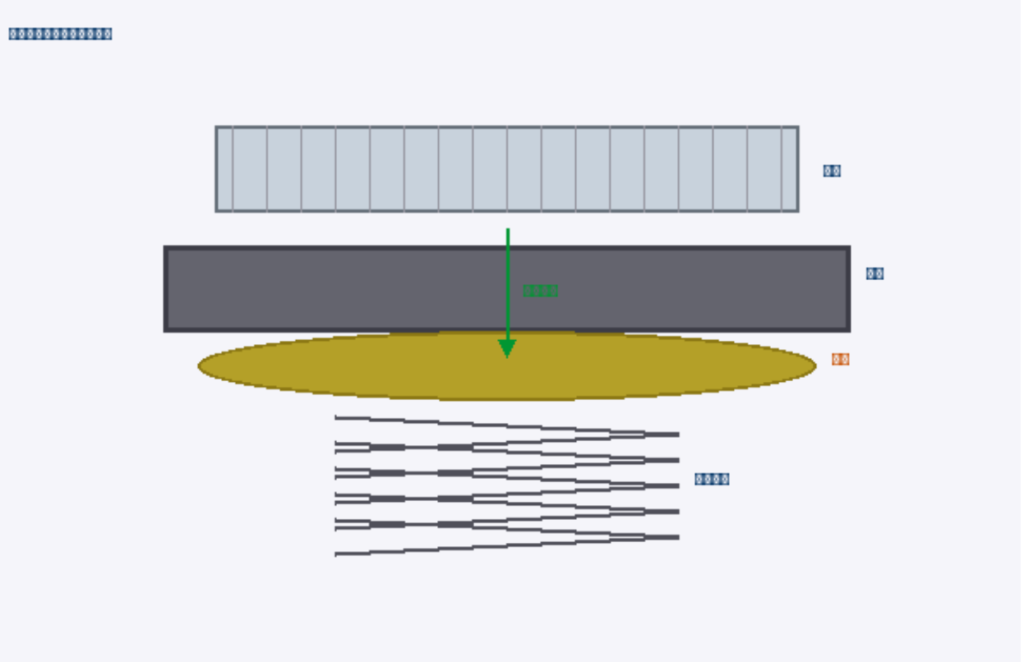
Core Knowledge Points
- The core function of the base valve is to control oil outflow during the compression stroke and prevent fluid backflow during the rebound stroke.
- Traditional spring poppet valves feature fast response speed but produce obvious flapping noise and are not suitable for heavy-load working conditions.
- Modern multi-disc stacked valves combined with stepped orifice valve systems realize progressive damping and deliver smoother damping characteristic curves.
- Poor flatness of valve plates will cause incomplete closure and internal oil leakage, resulting in insufficient rebound performance of shock absorbers.
- Integrated check steel balls and buffer pads are adopted to absorb hydraulic impact at the stroke end and protect components.
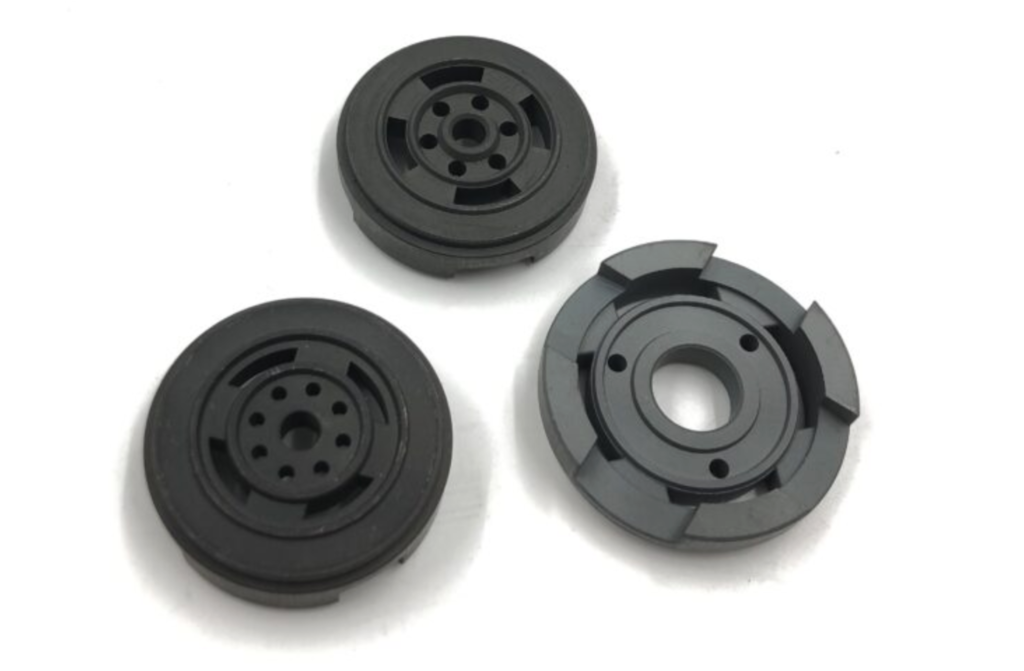
- Powder metallurgy valve seats enable the forming of complex flow passages and possess good self-lubricating property, improving overall durability.
Detailed Content
The base valve, also named compensation valve or compression valve, is a vital fluid control component installed at the bottom of twin-tube hydraulic shock absorbers. It connects the inner cylinder and outer cylinder, and cooperates with the piston valve assembly at the upper part to jointly regulate the flow of damping oil. Its structural design and working performance directly affect the damping effect, service life and driving experience of the entire shock absorber.
1. Core Functions of Base Valve
The base valve operates in coordination with the piston valve to complete the oil circulation inside the shock absorber during compression and rebound strokes, undertaking two key tasks.
In the compression stroke: When the vehicle wheel moves upward under road impact, the piston rod is pressed down, reducing the space inside the inner cylinder. The high-pressure damping oil is pushed to flow from the inner cylinder to the outer cylinder. At this time, the base valve opens under oil pressure to control the oil outflow rate, generating compression damping force to suppress the compression displacement of the shock absorber.
In the rebound stroke: When the wheel resets and the piston rod moves upward, negative pressure is formed inside the inner cylinder. The damping oil in the outer cylinder needs to flow back into the inner cylinder. The base valve is fully closed at this stage to block the reverse flow of oil. All backflow oil passes through the piston valve on the piston assembly, so as to form stable rebound damping force and avoid abnormal jitter of the vehicle body caused by oil channel confusion.
2. Advantages and Disadvantages of Traditional Spring Poppet Valve
The spring poppet valve is an early classic structure of shock absorber base valves, mainly composed of a conical valve body, return spring and basic valve seat.
Advantages: The structure is simple with few parts, low manufacturing cost and easy assembly. The conical valve body can be quickly opened and closed under oil pressure, featuring sensitive response, which can meet the basic damping demands of early ordinary passenger cars and light vehicles.
Disadvantages: Limited by structural characteristics, the defects are prominent in complex working conditions. First, the conical valve body will repeatedly collide with the valve seat during frequent opening and closing, producing obvious flapping impact noise. Second, the flow area is fixed, and the damping force changes sharply with oil pressure, resulting in poor linearity of the damping curve. Third, it cannot bear large instantaneous pressure, so it is unable to adapt to heavy-duty vehicles, off-road vehicles and modified vehicles with high load requirements. In addition, the single sealing structure is prone to seal failure after long-term operation.
3. Advantages and Disadvantages of Modern Multi-disc Stacked Valve
With the upgrading of vehicle comfort and handling requirements, the multi-disc stacked valve gradually replaces the spring poppet valve and becomes the mainstream structure of modern shock absorber base valves. This structure is matched with stepped orifices on the valve seat, and consists of multiple thin valve plates with different stiffness stacked together.
Advantages: Under low oil pressure in the early stage of compression, only a small number of flexible valve plates are opened, forming soft damping to guarantee ride comfort; when the compression stroke increases and oil pressure rises, more valve plates are pushed to open layer by layer, and the flow area gradually expands to form progressive damping. The overall damping curve is smooth and continuous. Besides, the stacked valve plates have strong pressure resistance and can adapt to high load and frequent impact working conditions. The planar fit between valve plates and valve seat also effectively enhances sealing performance.
Disadvantages: The assembly process is complex, requiring strict control over the quantity, thickness and flatness of each valve plate, which raises the processing and assembly precision requirements and overall production cost. If the thickness collocation of valve plates is unreasonable, it will affect the matching of damping characteristics.
4. Absorption of Terminal Hydraulic Impact
When the shock absorber is compressed to the limit position, the instantaneous oil pressure surges easily, forming strong hydraulic impact which may damage the valve assembly and related parts. To solve this problem, modern base valves are generally equipped with integrated check steel balls and buffer pads.
The check steel ball acts as an auxiliary one-way passage. When the terminal pressure exceeds the set value, the steel ball is pushed open to release excess oil pressure instantly and prevent excessive pressure from impacting the valve system. The rubber or composite buffer pad is installed at the contact position of moving parts. It can buffer mechanical collision while absorbing part of hydraulic vibration and noise. The combination of the two structures effectively realizes terminal anti-impact protection and extends the service life of the base valve and the whole shock absorber.
5. Application of Powder Metallurgy Valve Seat
The valve seat is the mounting base of the valve plate and flow channel carrier. Traditional cast iron or machined steel valve seats have limitations in processing complex flow passages. At present, powder metallurgy materials are widely used to produce base valve seats.
On the process side, powder metallurgy can be integrally formed into various irregular flow channels, stepped holes and positioning structures at one time, with high dimensional accuracy and no need for complex secondary machining. On the performance side, tiny pores inside the powder metallurgy material can store a small amount of damping oil, forming a self-lubricating film between the valve plate and the valve seat during operation, reducing friction and wear. Meanwhile, it has good structural strength and pressure resistance, and can keep stable performance under long-term high-pressure working conditions.
6. Summary
From the initial spring poppet valve to the widely used multi-disc stacked valve, the structural evolution of the shock absorber base valve is driven by the continuous improvement of vehicle performance requirements. The traditional structure is economical and practical but poor in comfort and load resistance; the modern stacked valve system optimizes the damping characteristics and adaptability through structural innovation.
The matching designs such as check steel balls, buffer pads and powder metallurgy valve seats further solve the pain points of impact, noise, wear and complex flow channel molding. In the future, with the development of intelligent and adjustable shock absorbers, the base valve will also develop towards adjustable flow and integrated modularization, to adapt to more diversified vehicle application scenarios