
External gas reservoirs are widely adopted in off-road vehicles, racing cars and heavy-duty shock absorbers.
1. Definition
A remote accumulator stores extra hydraulic fluid, nitrogen gas and a floating piston; some variants integrate compression adjustment valves. It delivers expanded internal volume for the main shock body and enhanced thermal capacity.
Layman’s analogy: It acts as an external cooling module and expansion bay for a computer, preventing overheating under sustained high-load operation.
2. Common Construction Materials
Material selection balances tensile strength, wear resistance, corrosion resistance, thermal stability, frictional performance, machining cost and mass production consistency.
| Component / Material | Application Rationale | Key Considerations |
| Aluminum Alloy Vessel | Low mass, superior heat dissipation, ease of precision machining | Anodize surface for anti-corrosion protection |
| Steel Fittings & Hoses | High pressure resistance and vibration fatigue tolerance | Sealing integrity and cyclic fatigue performance are critical |
| Floating Piston / Gas Bladder | Physical separation of hydraulic oil and nitrogen gas | Seal degradation induces aeration/foaming of oil |
| Nitrogen Gas | Provides pre-charge pressure | Pre-set pressure directly governs damping performance characteristics |
3. Manufacturing Workflow
- CNC Machining of Vessel Blanks
- Anodizing or Coating Surface Treatment
- Assembly of Fittings & Flexible Hoses
- Floating Piston Installation
- Oil Filling, Air Purging & Nitrogen Charging
- Leakage Inspection & Damping Bench Calibration
Note: OEMs implement proprietary material grades, surface finishing protocols and acceptance criteria. This document outlines universal industry practices for mass-produced passenger vehicles, aftermarket modified suspensions and high-performance shock absorbers.
4. Core Functions within Shock Absorber Assemblies
- Elevates total hydraulic fluid volume to mitigate temperature rise rate during continuous operation
- Offers enlarged gas compensation chamber for volumetric displacement compensation
- Provides dedicated packaging space for integrated compression adjustment valves
- Preserves consistent damping stability under successive impact loads in off-road driving conditions
5. Classification & Performance Differentiation
| Type | Core Characteristics | Functional Distinction in Shock Absorber | Optimal Application Scenarios |
| Hose-Coupled Remote Reservoir | Unlimited mounting positional flexibility | Unrestricted heat dissipation and layout adaptability | Off-road vehicles, motorsport racing |
| Piggyback Mounted Reservoir | Rigidly secured alongside main shock body | Ultra-compact integrated assembly | Motorcycles, lightweight off-road buggies |
| Valve-Integrated Reservoir | Built-in compression damping adjuster | On-site fine-tuning of compression response | Premium aftermarket performance suspension builds |
6. Quality Control Standards & Common Failure Modes
| Inspection Focus | Engineering Significance | Post-Failure Symptoms |
| Hose Pressure & Fatigue Endurance | Sustained cyclic vibration and bending stress during vehicle operation | External oil leakage or hose rupture |
| Nitrogen Pre-Charge Pressure | Suppresses fluid cavitation and defines initial damping force curve | Excessively soft or stiff low-speed damping response |
| Thermal Dissipation & Mount Geometry | Avoid direct exposure to high-temperature heat sources and road debris impact | Accelerated thermal fade or physical reservoir damage |
Observable field failure symptoms for operators & service technicians:
- Progressive damping thermal fade after prolonged traversal of rough terrain
- Oil seepage at reservoir hose fittings
- External hose abrasion/rupture caused by rock debris or tire interference
7. Executive Summary
External gas reservoirs serve no cosmetic purpose. By expanding the shock absorber’s total oil & gas volume and boosting heat rejection capacity, they enable sustained reliable performance under extreme high-load driving conditions.
Disclaimer: Exact material grades, dimensional tolerances and process windows shall comply with manufacturer engineering drawings, technical specifications and physical component testing standards. This material is intended for internal technical training, cross-department communication and fundamental engineering comprehension.
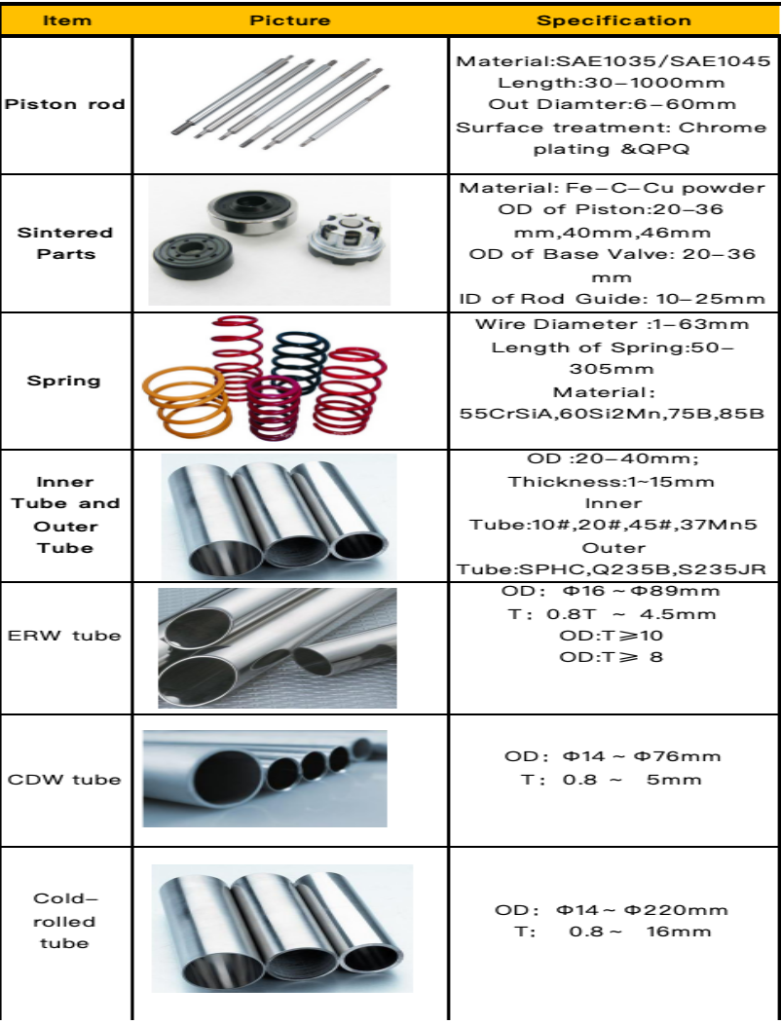
MAX products range include :piston rod, stamping part ( spring seat , bracket ) , shims , piston rod , powder metallurgy parts ( piston , rod guide ) , oil seal and so on .
✅Direct manufacturer
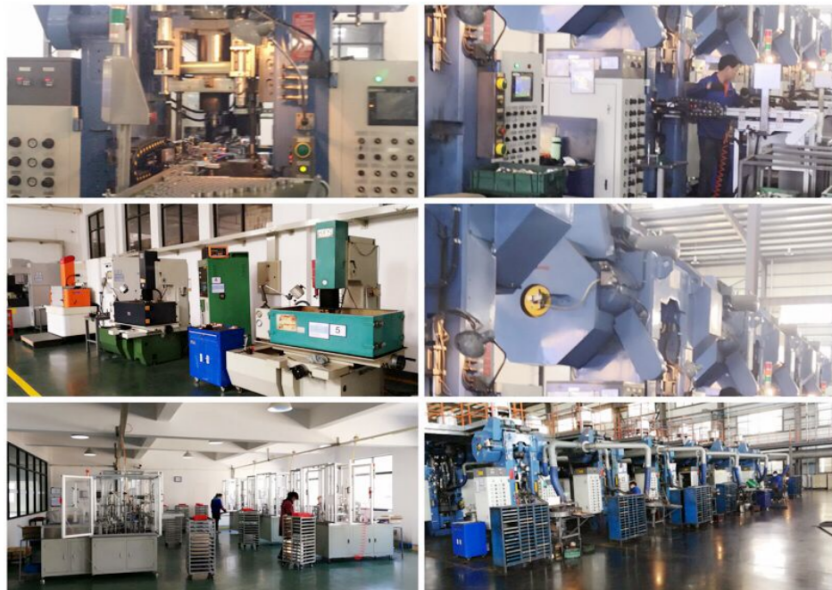
✅Customization team
✅ Quality inspection team ,12-month warranty Worry-Free After-Sales Service
Contact us for quotation & custom solutions✔ Competitive Price | ✔ Stable Quality | ✔ Fast Delivery | ✔ Global Supply